Agentic AI Workflows for Personal Decision Making
AI handles the background work so you can focus on actual decisions.
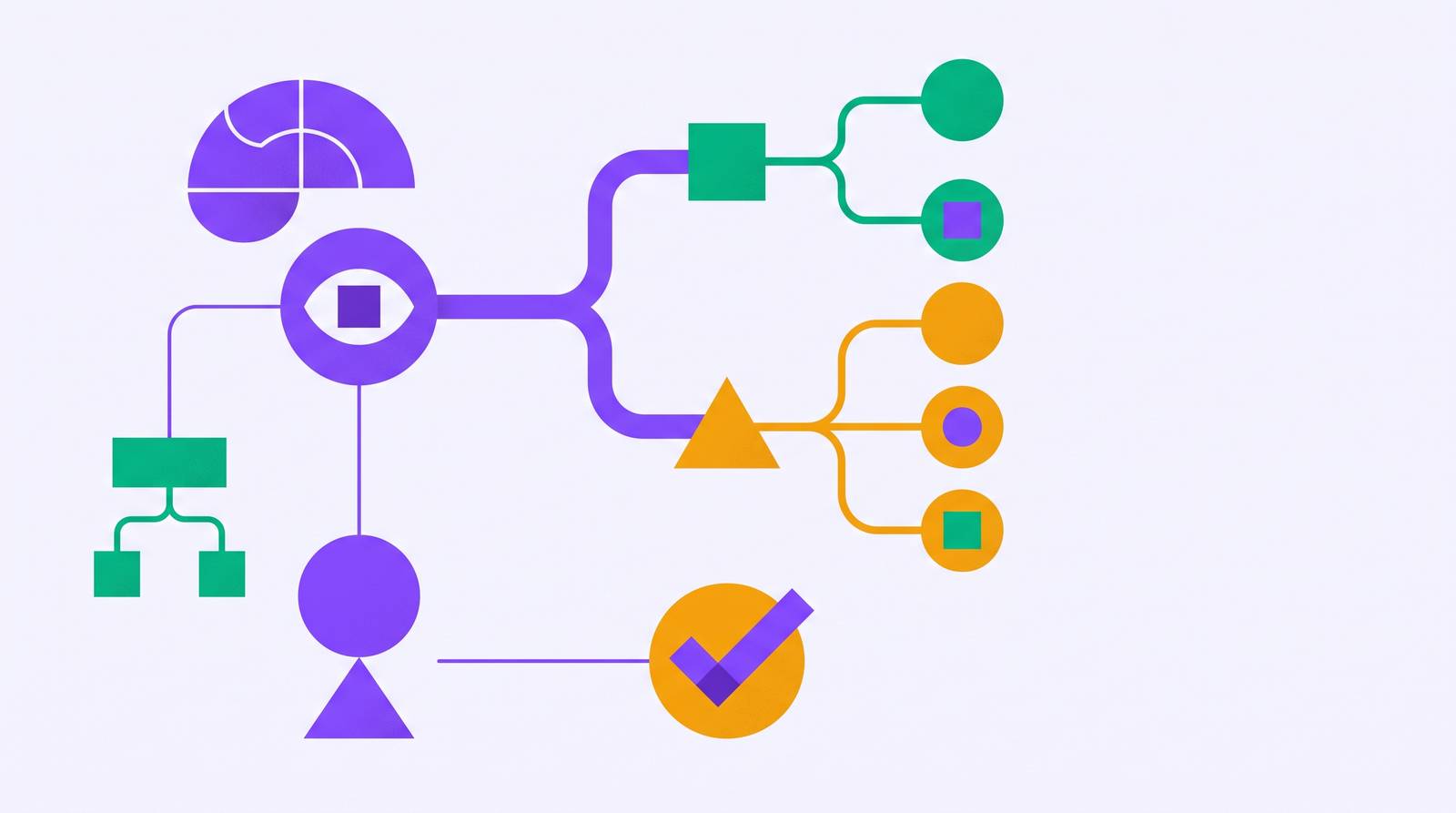
Here's what nobody talks about when they talk about decision fatigue: it isn't the moment of choosing that breaks you. It's the hours before. The low-level, continuous work of gathering information, cross-referencing calendars, tracking prices, monitoring whether anything has changed since you last looked. That perceptual labor is what depletes you. By the time you reach the actual choice, your judgment is already running on fumes.
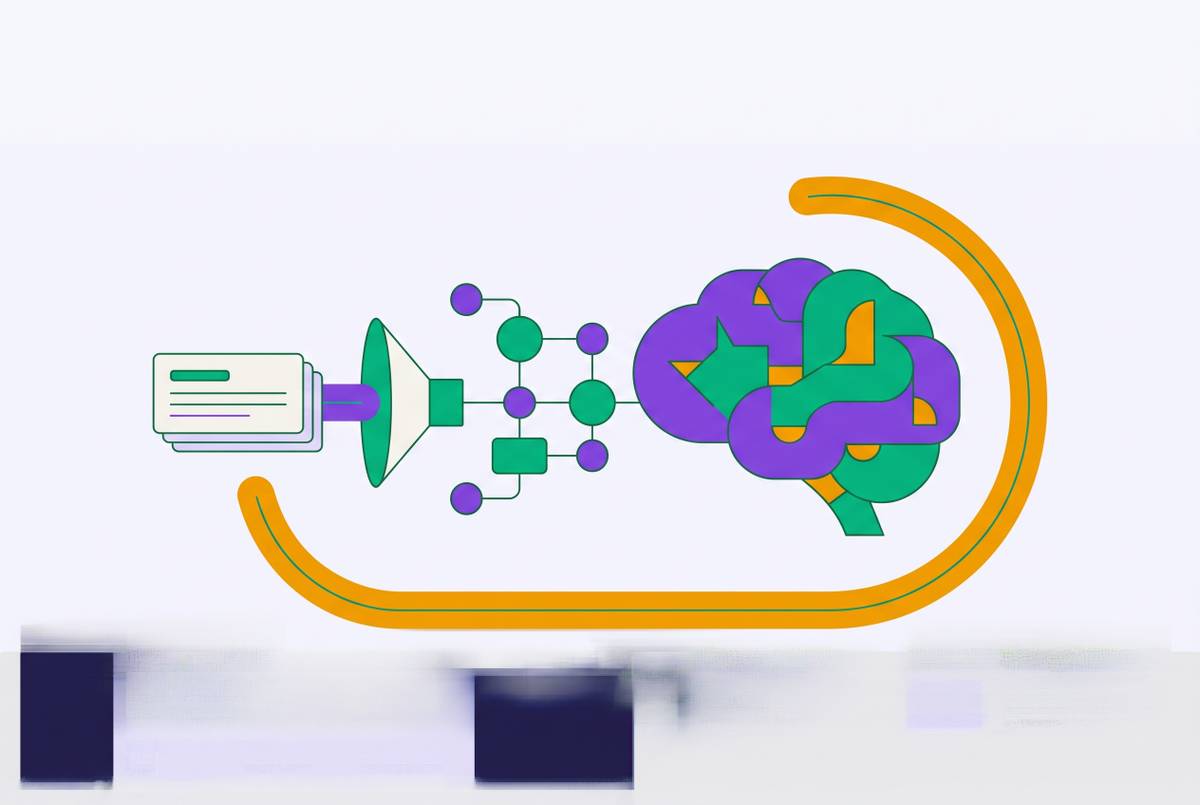
Agentic AI was structurally built for that loop. Not the final call. The continuous monitoring, the pattern-tracking, the surfacing of relevant signals from an environment that doesn't pause when you're busy.
Think about where this shows up in an ordinary life: watching whether your portfolio has drifted from your risk tolerance, noticing you've spent more on subscriptions this month than last, flagging that a refinancing window is opening. None of those are decisions. They're perceptual tasks, sustained and repetitive, and cognitively taxing in proportion to how many you're running simultaneously. Which, for most people with jobs and families and any kind of financial complexity, is a lot.
Personal contexts are also better structured for genuine human oversight than enterprise deployments tend to be. The person affected by an agent's action is the same person who can insert an approval checkpoint. That alignment of consequences and control matters more than it initially appears. Gartner designated agentic AI the top strategic technology trend for 2025, projecting that at least 15% of day-to-day work decisions will be made autonomously by 2028, up from essentially zero in 2024. Whether individuals use that capability well is a separate question entirely, and the honest answer is: not automatically.
How agentic AI is already handling the information-gathering work around financial decisions
Finance is the clearest illustration because the information problem in personal finance is severe. Relevant data changes continuously, across multiple sources, in ways that interact with each other. Your spending patterns interact with your savings rate, which interacts with market conditions, which interact with your tax situation. No human reviewing a quarterly statement is tracking all of that in real time, and pretending otherwise is how people get caught flat-footed.
Agents can do it. Continuously monitoring spending against stated goals, flagging portfolio drift relative to a defined risk tolerance, identifying tax optimization windows as they open, tracking income and payment history for loan eligibility. JPMorgan Chase, Bridgewater, Rocket Mortgage, and Bud Financial have all deployed agentic systems across investment strategy, loan evaluation, and personal finance management. These are live operations, not pilots.
On the consumer side, OpenAI explicitly names financial analysis and consumer purchase assistance as personal use cases for ChatGPT's agent mode. Anthropic built Claude Financial Analysis Solutions for due diligence and portfolio analysis. The institutional adoption accumulated fast, and most people haven't caught up to how quickly the landscape shifted beneath them.
What actually matters in the design of these systems, though, is the division of labor they imply. The agent brings you a synthesized picture: here's your current portfolio drift, here's the tax window, here's what your spending looks like against your stated goal. The human decides whether to rebalance, refinance, or adjust the budget. The judgment isn't delegated. The legwork is. Those are distinct things, and collapsing them is where people start making errors they can't easily trace back to their origin.
What agentic assistance looks like in scheduling, communications, and the smaller daily decisions
Email is the canonical example because almost everyone feels it. The cognitive tax isn't reading one message; it's maintaining awareness across hundreds of messages of what's actually urgent, what requires a thoughtful reply, what connects to something else you're tracking. That meta-awareness is exhausting to sustain, and most people are quietly terrible at it even when they think they're not.
Email agents operating inside Gmail or Outlook read incoming messages, categorize them by urgency, draft context-aware replies modeled on past writing style, and surface only the highest-priority items. The human reviews and sends; the agent reads and sorts. That redistribution of cognitive labor is more significant than it sounds, because it's not just about time saved. It's about arriving at the important messages with your attention still intact, rather than depleted by everything you waded through to get there.
Calendar coordination has reached the point where agents can negotiate directly with another person's calendar agent to lock in meeting slots, eliminating back-and-forth entirely while preserving the human's ability to override. Google's agentic checkout functionality, including "Buy for me" features live with selected US retailers in 2025, allows an agent to execute a purchase once the human has already decided what they want. Perplexity's conversational product discovery with instant checkout follows the same logic: decision already made, execution automated.
At the ambient end, smart home agents adjusting settings based on habits, time of day, and weather are exercising low-stakes autonomy that frees attention for higher-stakes choices. The pattern across all of these is consistent. The agent handles monitoring and coordination; the human retains the ability to redirect or override. Autonomy is delegated at the task level, not the goal level. Keep that distinction somewhere accessible, because it's going to come up again.
The tools available to personal users right now and what each is actually good for
ChatGPT's agent mode is the broadest entry point. Web browsing, file work, data analysis, virtual browser, multi-step task execution, all within a familiar interface that now reaches around 900 million weekly users as of mid-2025 reporting. For someone new to agentic workflows, it's the lowest barrier to genuine multi-step capability, which is both its strength and the reason you should be deliberate about what you hand it.
Perplexity's trajectory is instructive about where the market is heading. Its computer-based agent launched in mid-2025 at a premium price point, reached free availability on major platforms by early 2026, and climbed to the top tier of the iOS App Store almost immediately. When a $200/month product becomes free and then mass-adopted within roughly nine months, that's consumer normalization accelerating faster than most frameworks for thinking about technology adoption can track. The architecture behind Perplexity is worth understanding: routing subtasks across nineteen AI models simultaneously, running in isolated computing environments, supporting hundreds of app integrations, with tasks persisting over hours, days, or months. This isn't infrastructure for answering questions. It's infrastructure for running sustained personal workflows, which is a different thing with different implications.
Claude performs best for tasks requiring nuanced reasoning and careful instruction-following. Complex financial documents, sensitive communications, multistep problems that require holding a lot in working memory without losing the thread: that's where Claude earns its reputation. Gemini's strongest advantage is integration with Google Workspace and Android; if your data already lives in Google's ecosystem, that access to existing context makes Gemini meaningfully more capable in practice than raw benchmark comparisons would suggest.
Practitioner guidance that actually shapes responsible personal use: start with read-only or draft-only tasks before granting execution privileges. Require explicit confirmation before any sensitive action. Avoid granting broad access to financial, medical, legal, or credential-heavy workflows until you've built trust through lower-stakes use. These aren't conservative suggestions for the risk-averse. They're what keeps the human-in-the-loop structure functional rather than cosmetic, and that distinction turns out to be harder to maintain than it initially appears.
Where agentic autonomy creates real risks for personal decision-making specifically
The core risk isn't malice. It's propagation. A misalignment or oversight failure in a multi-step autonomous system can cascade across multiple connected systems before any human notices, precisely because the whole point of the system is that it runs without waiting for prompts at each stage. The thing that makes it useful is the same thing that makes errors hard to catch in time.
Privacy risk in personal contexts is structurally different from enterprise risk in ways that are easy to underestimate. An agent operating continuously in your personal life accumulates a detailed behavioral profile: spending habits, communication patterns, location signals, health metrics. In enterprise deployments, there are legal structures, compliance teams, and audit trails. In personal use, the oversight is primarily whatever the individual user applies, which is often less than they believe and rarely consistent. That asymmetry receives far too little attention in how these tools are marketed and discussed.
The trust data from 2025 is striking. Global trust in fully autonomous AI dropped from 43% to 27% in a single year, the same year that agentic AI deployment accelerated sharply. That inverse relationship suggests that real-world experience with these systems is making people more cautious, not less. That is the appropriate response, not because caution is inherently virtuous, but because the people who've actually used these systems at scale have learned something the benchmarks don't tell you.
Bias presents a specific problem in personal contexts. When an agent acts on behalf of a specific individual, training-data biases don't manifest as statistical noise across a population. They manifest as personalized harm: a financial agent that systematically underweights certain risk signals, a scheduling agent that patterns on assumptions baked into its training. The individual bears that harm directly, often without any clear signal that something went wrong, and often blaming themselves before they'd think to blame the model.
The regulatory environment hasn't kept pace with any of this. The EU AI Act's Article 14 requires effective human oversight for high-risk AI, but "effective oversight" of an agent running for days across hundreds of integrations remains undefined in any practical sense. In enterprise deployments, accountability for an agent's error is distributed across an organization. In personal use, you bear the full consequence of the financial, medical, or scheduling mistake, and there's no compliance team to absorb the impact.
Why "human-in-the-loop" is more complicated than it sounds when agents run complex, long-horizon tasks
"Human-in-the-loop" sounds like a safety guarantee. In practice, as agents handle longer and more complex task chains, humans are frequently reduced to validating AI decisions rather than deliberating about them. The accountability stays with the human. The agency has quietly diminished, sometimes without the human noticing it happened. Those are not the same condition, even though they look identical from the outside.
Research published in 2025 found that frequent AI usage correlates negatively with critical thinking scores, with regular AI users scoring meaningfully lower on critical reasoning assessments. The concern isn't just that you'll miss something in a particular task; it's that repeated delegation erodes the capacity for the very judgment you're supposedly preserving. And the erosion is gradual enough to be invisible while it's happening, which is the specific kind of problem that's hard to treat because you can't easily feel yourself losing a skill you're not actively using.
Work from Philosophical Psychology in 2025 draws a useful distinction: AI can augment self-control in decision-making, or it can act as a mechanism of remote control that reduces the human's degrees of freedom. The difference isn't in the technology. It's in how the system is designed and used. That puts the responsibility somewhere specific, even when it would be more comfortable to locate it somewhere diffuse.
The asymmetric dependence problem compounds everything else. The more an agent proves reliable over time, the more trust accumulates, and the less likely any individual recommendation gets scrutinized. This is the condition under which a quiet misalignment, or a bias that never surfaced before, finally does. You've been trained by the system's reliability to stop checking, and then one day you pay for that training.
What genuine oversight requires, rather than the nominal kind, is the ability to understand what the agent did, why it made the choices it made, and what alternatives it considered and rejected. Most current interfaces don't surface that. A confirmation button at the end of a long task chain isn't oversight. It's a signature on something you didn't read, and everyone who's signed a mortgage at a closing table knows exactly how that feels in retrospect.
How to structure agentic AI use so it augments judgment rather than quietly substituting for it
The governance principle that applies personally is the same one that applies in enterprise: agents should operate within delegated scope, with defined boundaries, under clear constraints, rather than with open-ended access to everything your accounts can touch. The principle sounds obvious. The implementation requires actual decisions about what you're willing to hand over and what you're not, and most people skip those decisions in the excitement of getting the thing to work.
A staged approach makes this practical. Begin with perception-only tasks: monitoring, aggregating, alerting, nothing executed. Let the agent surface information; let yourself act on it. Once that loop feels legible, move to draft-and-confirm tasks, where the agent prepares an action and you approve before anything happens. Expand execution autonomy only in narrow, reversible domains where errors are recoverable. Reserve final judgment on financial, health, and relational decisions for yourself, by design, not by default.
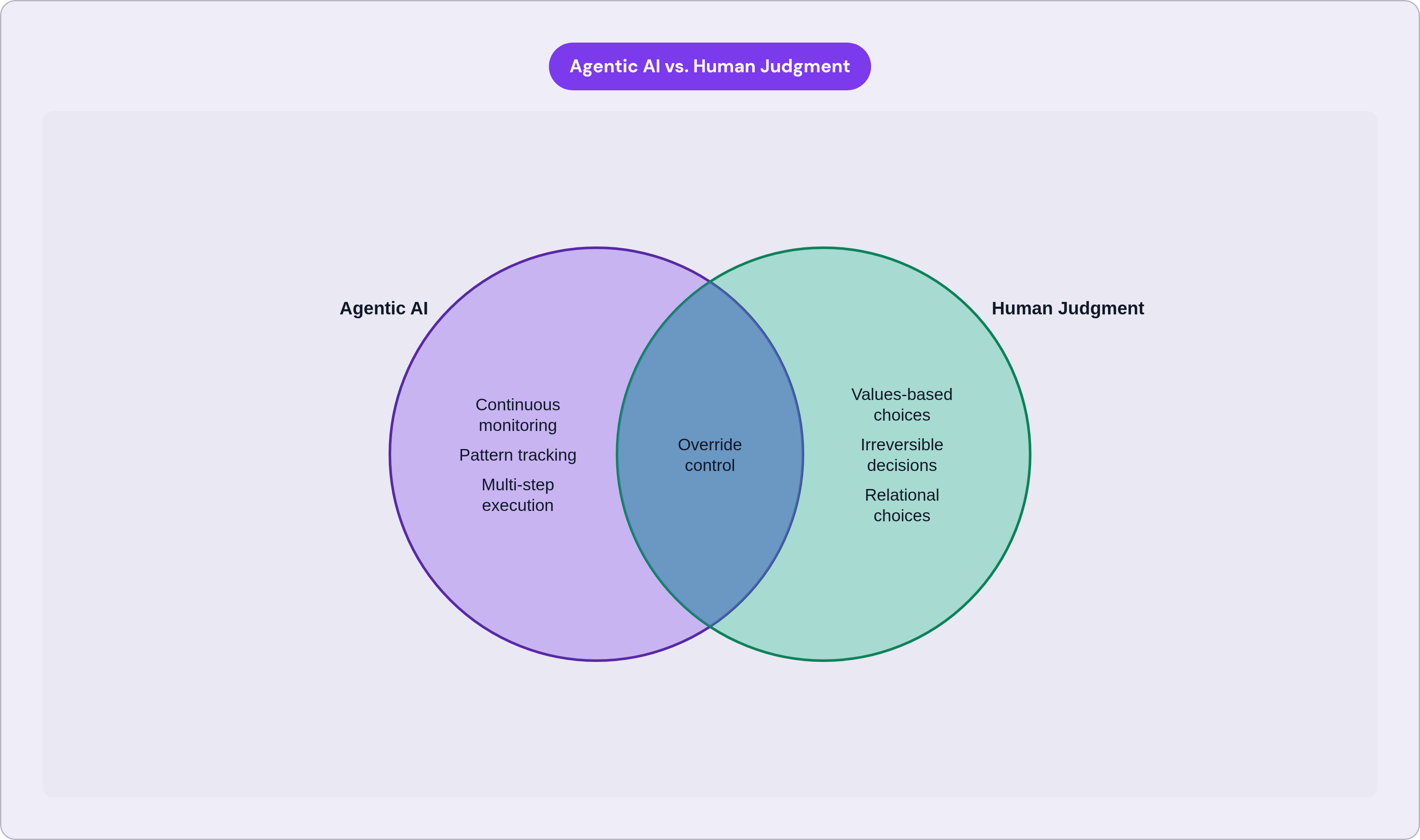
The domain split that follows from this: let agents own the perception-reasoning-action loop for information-gathering and pattern-tracking. Keep yourself as the final decision-maker when the choice involves values, relationships, or irreversible consequences. Those two categories don't overlap cleanly in the real world, and thinking through which category a given decision falls into is itself a useful discipline. Probably the most useful one.
There's a subtler point that doesn't get stated directly enough. The goal of delegation should be to free your attention for the thinking that matters, not to avoid the thinking entirely. If you're delegating a task because the execution is mechanical and your judgment is what actually matters, that's the right use of the tool. If you're delegating it because you'd rather not think about it, you're substituting rather than augmenting, and at some point that distinction will cost you something concrete and real.
A majority of companies surveyed in 2025 reported that agentic AI improved oversight of their business workflows. The pattern holds for personal use too, but only when the agent is surfacing what it found rather than concealing it behind a clean recommendation. The design questions to ask of any personal agentic tool: Does it show its work? Can you redirect it mid-task? Does it require confirmation before acting on sensitive data? These aren't optional features or nice-to-haves. They're what separates a system that expands your capability from one that quietly replaces it, and the difference between those two outcomes is what this whole question is about.