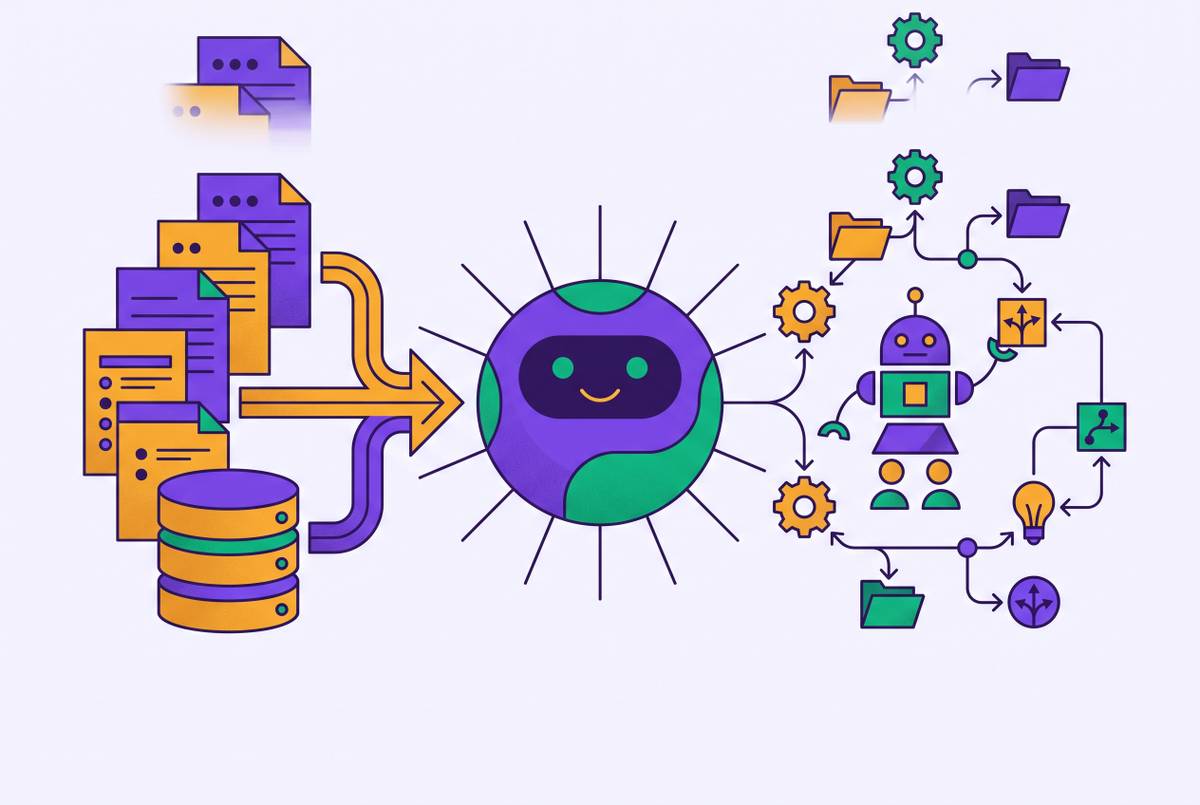
personal AI assistants that support proactive multi-platform communication
Persistent memory and autonomous execution enable assistants to act on your behalf across apps.
Two things had to happen before proactive assistants could exist outside of demos. First, persistent memory: when OpenAI and Google rolled out memory features across ChatGPT and Gemini in 2025, assistants stopped forgetting everything the moment you closed the tab.
That sounds small. It isn't. Memory means an assistant can hold onto your writing style, your recurring Tuesday standup, the fact that you're three weeks into a project involving a specific vendor. Over time it notices patterns: which updates you actually want to hear about, and which ones you'd rather it handle quietly. Personalization stops resetting to zero every session.
The second piece is agentic execution. Assistants can now poll for state changes, check conditions on a set schedule, and fire off actions without anyone typing a prompt. Most people assume one of these two pieces matters more than the other, but memory and execution depend on each other in practice. Memory without execution just sits there, informed and idle. Execution without memory acts, but blindly, with no sense of what actually matters to the person on the other end. Put them together and memory tells the assistant what matters to a given person, while the agentic loop lets it act the moment conditions line up. Miss either piece, and the assistant might be smart, even genuinely useful, but it still needs a human to hit "go" every time. That gap is what separates a good chatbot from something that actually acts on your behalf.
How context-awareness determines when and where to surface information
Memory plus execution gets an assistant capable of acting on its own. Deciding when acting is actually a good idea is the harder problem, and it's the one most vendors gloss over. It comes down to reading several signals at once: what app someone's currently in, whether they're mid-meeting or idle, whether the information can wait an hour or needs to land right now, whether this situation matches something the assistant has seen before.
Apple's on-device assistant features are a clean example of this approach. The system reads context that's likely relevant to what you're doing and acts without being asked, guessing at intent instead of waiting to be told.
Google's approach takes a wider swing at the same idea, with assistant features designed to give the system a more proactive posture across multiple apps.
A routing question sits underneath all of this, and it takes longer to work through than most teams expect. A low-urgency reminder belongs in a daily digest, something glanced at over coffee. A scheduling conflict that's about to happen belongs in a push notification, wherever someone's active right now. Mix those up and the cost isn't small: get the channel wrong often enough, and people start tuning the assistant out entirely. This judgment layer, deciding when and where, is where most of the real engineering difficulty sits. Memory and execution are almost the easy part by comparison, and most teams building these products spend their time on the wrong half of the problem.
What multi-platform actually requires under the hood
A single-surface assistant, chat-only or app-only, can be reactive or proactive on its own turf without much trouble. True multi-platform proactivity asks for different architecture entirely.
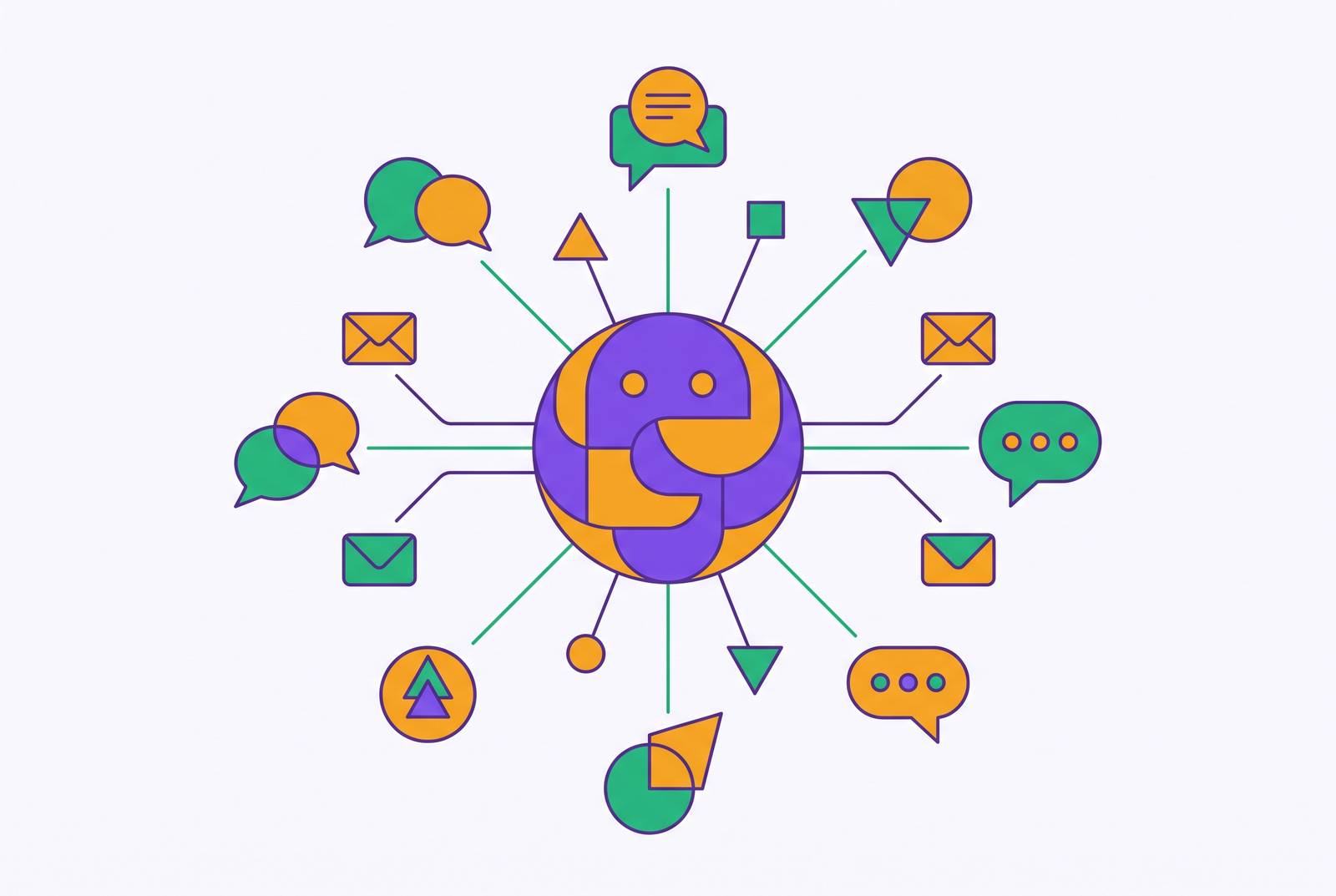
At minimum that means a runtime that keeps running even when nobody has an app open, waking on its own schedule instead of only in response to a user poking it. It means authenticated connections into channels like Slack, email, SMS, or Telegram that can read and write, not just watch. It needs a shared context store, so something learned in one channel is available when the assistant acts in a completely different one. And it needs channel-aware output: the same underlying decision has to look different depending on whether it lands as a text, a Slack message, or an email.
Here's the catch. Workers already juggle dozens of disconnected tools: Slack, Zoom, Notion, Jira, Asana. This fragmentation is a widely cited restraint on the market. These tools don't share data cleanly, so plenty of companies simply lock their AI assistants to a single app to sidestep privacy and compliance headaches. That guts the whole point of multi-platform in the first place, and it's a far more common compromise than most "multi-platform" marketing lets on.
Plug-in ecosystems are the current workaround, and plug-in ecosystem growth is broadly seen as one of the field's bigger drivers, letting assistants reach into more SaaS tools and CRMs than they could on their own. Underneath the plug-ins sits a real architectural fork, and it's the choice that matters more than anything else in this space. One path is hub-and-spoke: a single assistant orchestrates across many tools through APIs, which describes most implementations on the market today. The other is local-first: everything runs on the user's own hardware, cutting down how much data ever leaves the machine. OpenClaw is built this way, running through a local Gateway daemon with 24 channel integrations covering WhatsApp, Telegram, Slack, Discord, Signal, and iMessage.
Hub-and-spoke wins on breadth. Local-first wins on trust, and trust is the harder bet to make but the more honest one to sell, because it doesn't ask anyone to take a vendor's word for what happens to their data once it leaves the device. Breadth is easy to pitch in a demo. Trust is what actually determines whether someone keeps the assistant connected six months in, and if there's a default worth picking, it's local-first.
The assistants that have built proactive multi-platform communication into their core design
What follows isn't a ranking. It's a map of a handful of genuinely different bets on how proactive, multi-platform assistants should work.
Lindy AI leans execution-first, spanning email, Slack, meetings, calendars, and other business tools. It connects to over 2,300 apps and handles customer support, lead generation, inbox management, and meeting notes. Having raised more than $50 million across multiple rounds, Lindy prices in tiers from $49.99 a month at Plus up to $199.99 a month for Max, with inbox limits and computer-use ability scaling by tier. The breadth of integrations reads as the selling point, but sit with it for a second: orchestration gets messier, not cleaner, as the number of connected apps climbs. More apps means more places for a proactive decision to go wrong, and 2,300 of them is a lot of surface area to get right.
Pokee AI takes an action-first stance across more than 90 business tools, with native connections into Gmail, Slack, HubSpot, Jira, Salesforce, Shopify, and GitHub. It sends the email, updates the CRM record, deploys the code, runs the scheduled workflow, going beyond simple suggestions. It's built more for teams needing cross-functional automation than for one person managing their own day.
OpenClaw sits at the opposite end from Lindy on privacy: open-source, local-first, with 24 channel integrations, all running on hardware the user actually owns. It's built for people who can't, or won't, route their data through someone else's servers, and the cost is setup complexity, since self-hosting isn't a five-minute install.
Kolo AI came out of stealth in September 2025, built around conversation continuity across SMS, its mobile app, and the web, with a proprietary model orchestrator syncing the thread wherever someone picks it up. A multi-user SMS feature and a self-tuning personalization layer suggest a bet that fitting the user matters more than raw horsepower.
Manus, now under Meta following a roughly $2 billion acquisition, operates with less hand-holding than most: writing code, deploying apps, browsing the web, working across Telegram, WhatsApp, LINE, and Slack. That price tag alone says something about how seriously Big Tech now treats agent-native assistants, positioning them as infrastructure rather than a feature bolted onto a chatbot.
Then there's the platform layer itself. Apple builds proactivity into the OS, where Call Context pulls up a confirmation code automatically, on-device, with no cloud round-trip. Google's assistant approach pushes proactivity into the interface layer directly, with context-aware features built into the platform itself. Both are making the same bet: proactivity belongs baked into the platform, not tacked onto an individual app.
Every one of these products answers the same underlying question differently: where does the assistant's judgment actually sit, and what is it allowed to do without checking in first?
Why proactive AI outperforms reactive AI in measurable outcomes — and where it still falls short
The evidence that proactivity works is real, though it clusters heavily around commerce, where the incentive to measure it is strongest. According to Hello Rep, when shoppers are greeted by an AI assistant instead of having to start the conversation themselves, 45% engage with it, and proactive-approach conversations recovered abandoned carts at a 35% rate. Walmart's 2025 Retail Rewired Report found 54% of shoppers say digital assistants save them time while shopping in-store.
Customer service tells a similar story. Salesforce's 2025 State of Service report found AI agent adoption grew from 39% to 66% year-over-year, roughly a 1.7x jump. A Gartner survey of 4,879 customers, run in early 2025, found 51% already willing to let a generative AI assistant handle service interactions on their behalf.
That's only half the picture, and it's the half most coverage skips. User research on proactive assistants has found that persistent suggestions can read as distracting rather than helpful, with some participants preferring a less proactive version because of how often it interrupted them. That finding speaks less to proactivity as an idea and more to what happens when proactivity ships without good timing and relevance judgment.
Even Walmart's own report shows the gap between "this helps" and "I trust it fully": 46% of respondents said they'd be unlikely to let a digital assistant manage an entire shopping trip on its own. Being willing to accept help isn't the same as being willing to hand over the keys. Proactivity needs ongoing tuning; it's rarely a switch flipped once and forgotten.
The calibration problem: how well-designed proactive assistants decide what not to do
Here's the thing nobody puts on the feature page: the hardest problem in proactive AI is knowing when to hold back. Most products get this backwards, treating restraint as an afterthought rather than the actual design goal, and it shows up first as a spam problem before anyone calls it that.
A few principles separate the assistants that get this right from the ones that don't. There's a relevance threshold, where information only surfaces once confidence that it's actually needed clears a real bar, not a low one. There's timing sensitivity: the exact same piece of information is worth an interruption during a lull between tasks and not worth one mid-meeting. There's user-controlled sensitivity, letting people dial how often and through which channel they hear from the assistant. And there's graceful degradation: when the system isn't sure, it queues the message instead of pushing it.
The pattern is well established: proactive messages that land at the wrong time or miss the mark don't just waste that one interaction; they chip away at trust in the whole system going forward. Memory turns out to be the prerequisite for getting any of this right, since an assistant with no sense of your patterns has no way to tell a real signal from background noise. Channel choice is part of calibration too: an SMS interrupts differently than a quiet in-app badge does, and a Slack DM during work hours reads completely differently than the same message arriving at 10 p.m.
Which leads somewhere worth sitting with, and it only becomes clear once the commerce numbers and the CHI findings sit side by side: the value of a proactive assistant doesn't scale with how many proactive things it does. It scales with how often those things are right. Products that treat proactivity as a volume problem, more nudges, more alerts, tend to land exactly where that CHI 2025 study did. Products that treat it as a precision problem land closer to the engagement numbers coming out of the commerce research. The volume bet loses, full stop, and the market data above says so even when the vendor pitch doesn't.
Privacy and trust as structural constraints on proactive systems
Proactivity runs on data access. For an assistant to know when to act, it has to read messages, calendars, files, and history, continuously and in the background.
A reactive assistant only sees what someone chooses to show it in the moment. A proactive one, by design, sees far more, all the time, and that's a fundamentally different privacy surface. The tradeoff runs in both directions at once: more context makes the assistant sharper about when to step in, but it also means more exposure if that data ever gets mishandled.
Two architectures respond to this tension in opposite ways, and one of them is clearly the better default. Apple's on-device approach processes context locally, so personal data never has to touch a server in order to inform a proactive action. OpenClaw goes further, routing nothing through outside infrastructure at all, which limits what any vendor can see to essentially nothing. On-device wins here, plainly, because there's no server in the loop for something to go wrong on. Cloud-based hub-and-spoke tools ask for more trust than they've earned, and the burden should sit on them to prove otherwise, not on the user to assume the best.
Enterprises feel this pressure even more sharply. Organizations often lock AI assistants to a single app specifically to keep data from crossing system boundaries, and the MarketsandMarkets research names this as one of the market's central restraints. None of this is abstract. Walmart's finding that 46% of shoppers won't let an assistant manage a full trip on its own reflects a trust reading, not just a preference for staying in control. Being clear about what an assistant reads, when it reads it, and why is the condition that has to be met before people grant the kind of access proactivity actually needs to work.
How to evaluate a proactive multi-platform assistant against what you actually need
A few questions cut through most of the marketing noise here, worth asking roughly in this order.
Start with where someone actually lives day to day. An assistant that can't reach the channels checked most, whether that's Slack, SMS, or email, is proactive only on paper. Next, consider how much autonomous action feels comfortable to grant. There's a real gap between an assistant that reads a calendar and flags a conflict, and one that reschedules the meeting itself. Neither answer is wrong, but they call for different products, and pretending otherwise is how people end up disappointed six months in.
From there, look at where the processing actually happens: on-device the way Apple's Call Context works, local-first the way OpenClaw is built, or cloud-based the way most hub-and-spoke tools operate. That choice determines privacy exposure more than any feature list will. Check how many of the tools already in daily use it connects to natively versus through a fragile plug-in, since that gap tends to show up right when the integration matters most. And ask how the assistant handles uncertainty. Does it queue a low-confidence action for review, or does it fire and hope? That single behavior says more about whether an assistant earns trust over months of use than any spec sheet does.
Persistent memory sits underneath nearly every one of these questions, since it's what lets an assistant tell real patterns apart from noise in the first place. Tools like Vellum, which pair a persistent memory layer with agentic execution loops, show what that combination looks like in practice: an assistant that can act on someone's behalf without waiting to be prompted every single time. The real dividing line in this category has little to do with how many apps an assistant can reach. It has everything to do with whether it knows, with real precision, when reaching out is worth doing at all.