no-code AI assistant platforms that offer persistent user memory out of the box
Persistent memory varies wildly across platforms despite identical marketing claims.
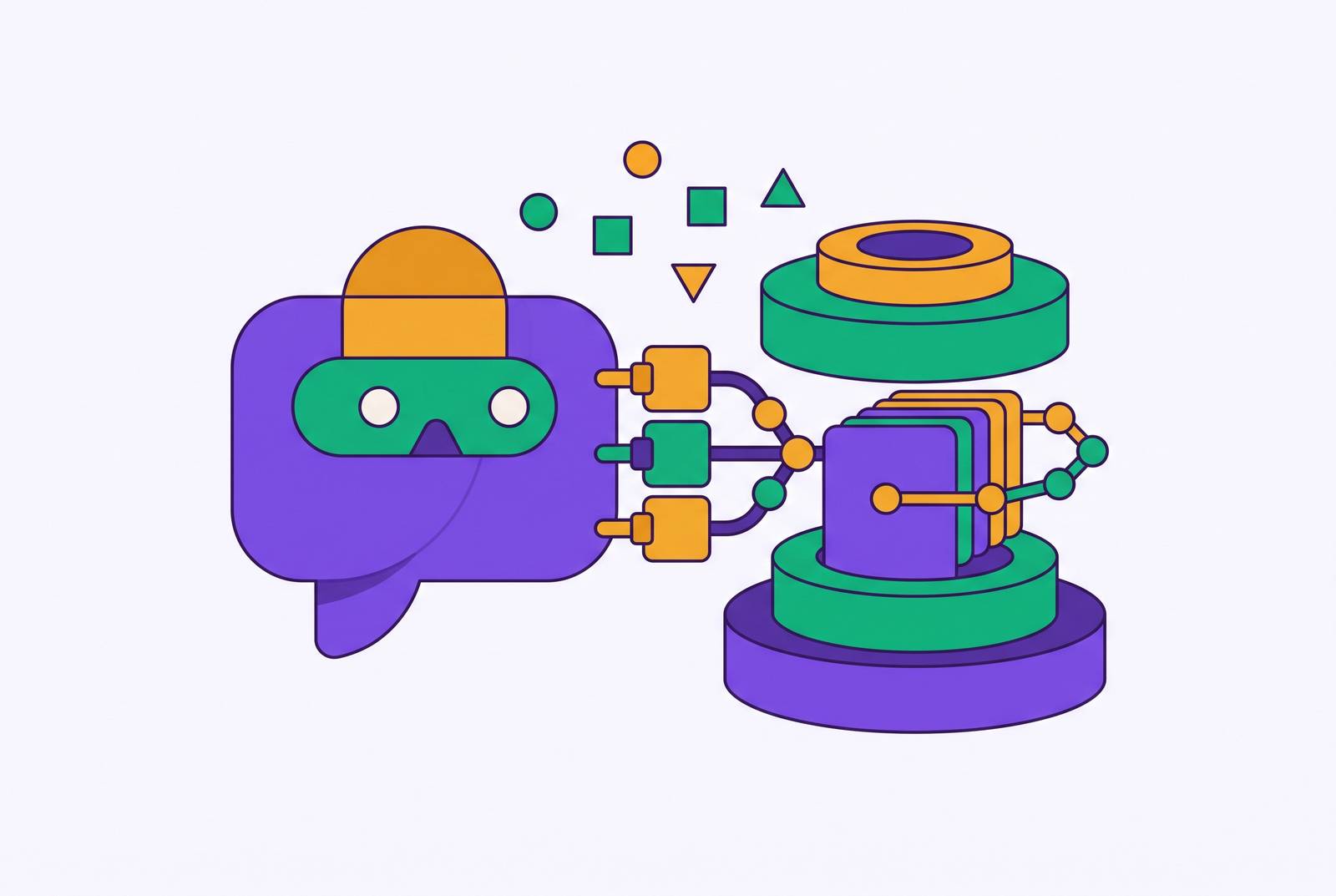
Persistent memory has quietly become a baseline requirement for no-code AI assistant platforms; it's not a bonus feature vendors tout to stand out. But a label that says "memory" doesn't tell you what's actually stored, how deep it goes, or whether it holds up across sessions.
Why persistent memory has become a standard expectation for no-code AI assistant platforms
A year ago, persistent memory was a selling point. Now it's close to a baseline expectation, something a platform needs just to be considered in the same category as its competitors. That shift sounds simple until you ask what "memory" is actually doing under the hood, and the honest answer is: it depends entirely on which vendor built it.
Large language models don't remember anything on their own. If the platform doesn't build something external to hold onto what happened before, every session starts from zero. So when a team evaluates a no-code AI assistant, the real question isn't whether memory exists.
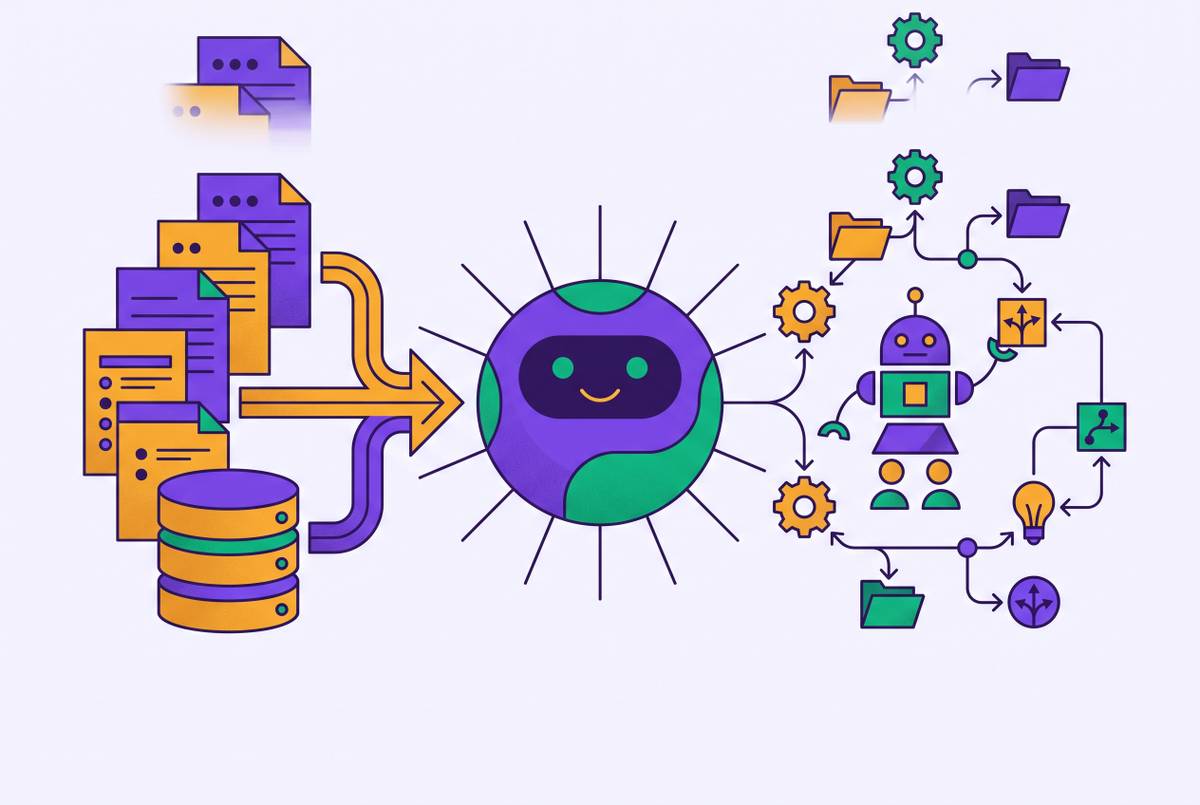
Three rough tiers have settled out of the market. ChatGPT, Claude, and Gemini are general-purpose consumer assistants, and they ship automatic memory baked into the product. No-code business agent builders like Lindy offer per-agent memory that persists across runs. And MemoryLake is enterprise memory infrastructure, so it offers memory that travels with the user across different platforms entirely.
The consequence of this split is that two platforms can both claim "persistent memory" and mean almost opposite things. One might store just a short list of preference facts, refreshed every so often. The other might maintain a profile that's constantly being rewritten, built from thousands of individual facts pulled from every conversation a user has ever had. Both get marketed the same way. Only one of them compounds in value the longer someone uses it.
Memory is separate from a large context window, because the two get confused constantly. A platform can have an enormous context window and still forget everything the moment a new chat starts. That distinction is the foundation for evaluating any of these tools seriously, and it raises the real question the marketing obscures: what actually makes memory deep enough to get more useful over time, rather than just piling up?
What memory depth means and why it determines whether memory compounds value over time
Memory depth varies more than any other feature across the platforms on the market today. Shallow memory stores a flat list of preferences. Deep memory organizes what it knows into distinct types and treats each one differently.
The deeper systems split stored information into separate categories: stable facts about who the user is, timestamped records of past decisions, and ongoing state for ongoing projects. Think about a scheduling assistant. One forgets context the instant the task shifts. The other anticipates what's coming because it can connect the dots across time.
The platforms with the deepest memory use architectures that combine several types of databases at once, vector stores, knowledge graphs, and key-value stores together, so the system can reason across multiple linked facts rather than retrieving one isolated detail at a time. That's the difference between an assistant that answers "what did we decide last week" and one that can only answer "what did you tell me five minutes ago."
The gap between vendors on this point is substantial. Neither one is labeled differently on a pricing page.
Depth has a cost dimension too, one that's easy to miss. Persistent memory, done well, acts as a filter: it pulls only the most relevant pieces of history into a given prompt instead of re-sending the entire conversation record every time. A system that can rank what's relevant keeps inference costs lower as usage grows, because it's not paying to process the same facts over and over. If a system can't rank relevance, it either bloats every prompt with irrelevant history or drops useful context to save money. Neither is a good trade.
One might argue that more depth just means more complexity, more places for something to break. A platform with no version control and no way to detect conflicting facts can't tell the difference between what used to be true and what's true now. Depth adds surface area, sure. But the alternative isn't simplicity, it's confident wrongness that never gets corrected.
How user control over memory shapes trust and long-term usefulness
Depth only pays off if the person using the assistant can see what it remembers and fix it when it's wrong. Memory that a user can't inspect or correct becomes a liability the moment it stores something inaccurate.
One approach is explicit and editable: Claude lets users view and directly modify individual memory entries. Both are defensible design philosophies. But they produce very different experiences when memory gets something wrong.
ZDNet's testing of ChatGPT's upgraded memory system found that the system can store outdated assumptions or incorrect personal details, and those details quietly shape future answers with no indication to the user that anything has gone sideways. That's a documented failure mode in a shipping product, which is the clearest argument for why editability matters as much as depth does.
Some platforms split the difference. Evermind's Memory Bank interface lets users look at and edit user memory, group memory, and agent memory directly, and Lindy's dashboard offers something similar for individual agents, memory that can be edited or wiped clean per agent. That middle path, full visibility without requiring manual management of every single fact, is where a lot of the real usability gains are happening right now.
In May 2026, OpenAI took a step in this direction when it introduced a feature called Memory Sources, which shows users which stored information shaped a given response. It's a meaningful addition. OpenAI itself says Memory Sources won't necessarily surface every factor that influenced a reply, so the gap between what the system knows and what the user can see narrowed but didn't close.
What should a team actually look for here? Four capabilities, in practice: the ability to view what's stored, the ability to edit or delete individual entries, the ability to wipe memory entirely, and some signal when a given response was shaped by something the system remembered. If a platform offers all four, it gives users real agency over their own data. If a platform only offers a reset button, users get a blunt instrument: useful when something's badly wrong, but useless for catching the kind of quiet distortion ZDNet documented. Knowing why an assistant answered the way it did is a debugging tool as much as a privacy safeguard. When an agent gives a strange answer, the first question is always "what did it think it knew," and a platform without memory transparency can't answer that question at all.
Why cross-session continuity breaks down
Advertising persistent memory is one claim. Delivering it reliably, across every session, without quiet degradation, is a separate claim, and the gap between the two is where most platforms show their real weaknesses.
Two structural problems cause this gap. The first is token limits: as a conversation grows, performance can decline well before the platform's advertised context limit is actually reached. Neither failure announces itself. The assistant doesn't announce that it lost track of the conversation; it just starts answering slightly worse, and the user is left wondering whether they imagined the earlier conversation.
A related phenomenon, sometimes called context rot, makes this worse: models tend to struggle more at pulling specific facts out of a long conversation as that conversation grows longer, not less. That means a bigger context window pushes the continuity failure further out instead of solving it, making it harder to notice when it happens. A platform can advertise a huge context window and still lose the thread on something a user mentioned earlier in the conversation.
Memory built inside ChatGPT stays inside ChatGPT, a structural issue that compounds for any team using more than one AI tool. A team juggling multiple AI tools loses continuity every time work crosses from one platform to another, and no import tool fixes that on an ongoing basis.
This is part of why portable, cross-platform memory is becoming a serious architectural direction rather than a niche feature. It's released under an MIT license, with a self-hosting option starting at $19 a month. That's not an endorsement of any one product so much as a signal of where the architecture is heading. Any team evaluating a platform today should ask the vendor directly: does memory travel with the user, or does it stay locked to this one tool?
The privacy and security risks that persistent memory introduces at the team and enterprise level
Memory that persists across sessions also persists across risk, and that's the strongest argument skeptics raise against adopting it broadly. Avoiding memory-enabled platforms isn't the answer; asking the right questions before deploying one is.
Start with what's sometimes called shadow AI. Turning off training data sharing does not turn off memory accumulation, and the two settings sound like they should be linked but aren't, which is a distinction worth asking any vendor about directly.
There's a regulatory dimension too. Most consumer-tier platforms don't offer organization-level tools to audit or delete memory at scale, which leaves a real compliance gap for any company subject to GDPR and using these tools informally.
Security researchers have documented a more direct kind of attack, an exploit known as SpAIware, in which a prompt injected indirectly through malicious web content planted something like persistent spyware inside ChatGPT's long-term memory, letting an attacker quietly pull data out across multiple sessions. It's a risk built into the architecture of persistent memory itself, and it grows as the memory store accumulates more sensitive material.
There's also a quieter policy question. For any team running business workloads through a free or low-cost tier, that's a data-handling decision, not just a user-experience detail, and it deserves the same scrutiny a company would give any vendor contract.
None of this means memory-enabled platforms should be avoided. It means a short list of questions should be part of every vendor evaluation: Is data isolated by user and by group, the way MemoryLake structures it? A platform that can answer yes to those questions has done the governance work. One that can't has left the organization to absorb that risk by default.
How the leading no-code platforms compare across memory depth, user control, and continuity
Put the three evaluative questions together, depth, control, continuity, and the platforms sort into fairly distinct use cases rather than a single ranked list.
ChatGPT leads on breadth and everyday usability. Its memory depth is high, with Dreaming V3 continuously synthesizing a behavioral profile from every session. Its user control is partial: Memory Sources, added in May 2026, admits by its own description that it doesn't show every factor behind a response, and editable saved memories sit alongside an inferred history users can't directly inspect. Continuity holds up well inside ChatGPT itself but doesn't extend to other tools, ad personalization applies on the Free and Go tiers, and OpenAI has said Business and Enterprise plans will get the Dreaming V3 upgrade in the weeks following the June 4, 2026 announcement.
Claude fits controlled, project-scoped work best. Memory became free for all users on March 2, 2026, with entries users can view and edit directly. Project chats and standalone chats keep separate memory spaces, so teams have to actively decide which context belongs where, and Claude's Projects feature offers a large context window suited to structured knowledge bases.
Gemini suits organizations already built around Google's ecosystem. Enterprise documentation describes building a personal memory profile from work patterns and connected apps like Outlook and OneDrive, which makes it a natural fit for teams managing ongoing projects and collaborators inside tools they already use daily.
Wonderchat takes a different approach: it's built for customer-facing chatbots rather than personal assistants. It connects to CRM systems, helpdesks, and knowledge bases to recall past interactions and customer preferences, so it fits best where deflecting repetitive support questions matters more than tracking any one person's history.
MemoryLake operates at the infrastructure layer rather than the interface layer. Its Memory Passport lets memory move across different AI applications and agents, and the platform handles multiple layers of memory alongside multimodal data: text, images, audio, structured events. It includes version control, conflict detection, and strict data isolation, starts at $19 a month, carries an MIT license, and offers self-hosting. It's built for teams assembling something on top of it, not for someone looking for a finished assistant out of the box.
Platforms built around memory from the ground up go further still. Vellum, for instance, maintains structured user profiles across sessions and learns preferences over time, and its reasoning layer is built to understand context and recognize patterns, not treat each session as a blank slate. It's aimed at engineering and product teams who want memory they can inspect and reason about, not a system that operates as a black box.
None of these platforms is the right choice for every team. Separating depth, control, and continuity isn't about crowning a winner; it gives any team evaluating a vendor a concrete set of questions to ask, so the choice comes down to which platform fits the actual workflow, not which one has the word "memory" on its homepage.