The Personal Intelligence Behind Reading Between the Lines of a Work Request
How AI systems can infer what employees really mean in vague work requests.

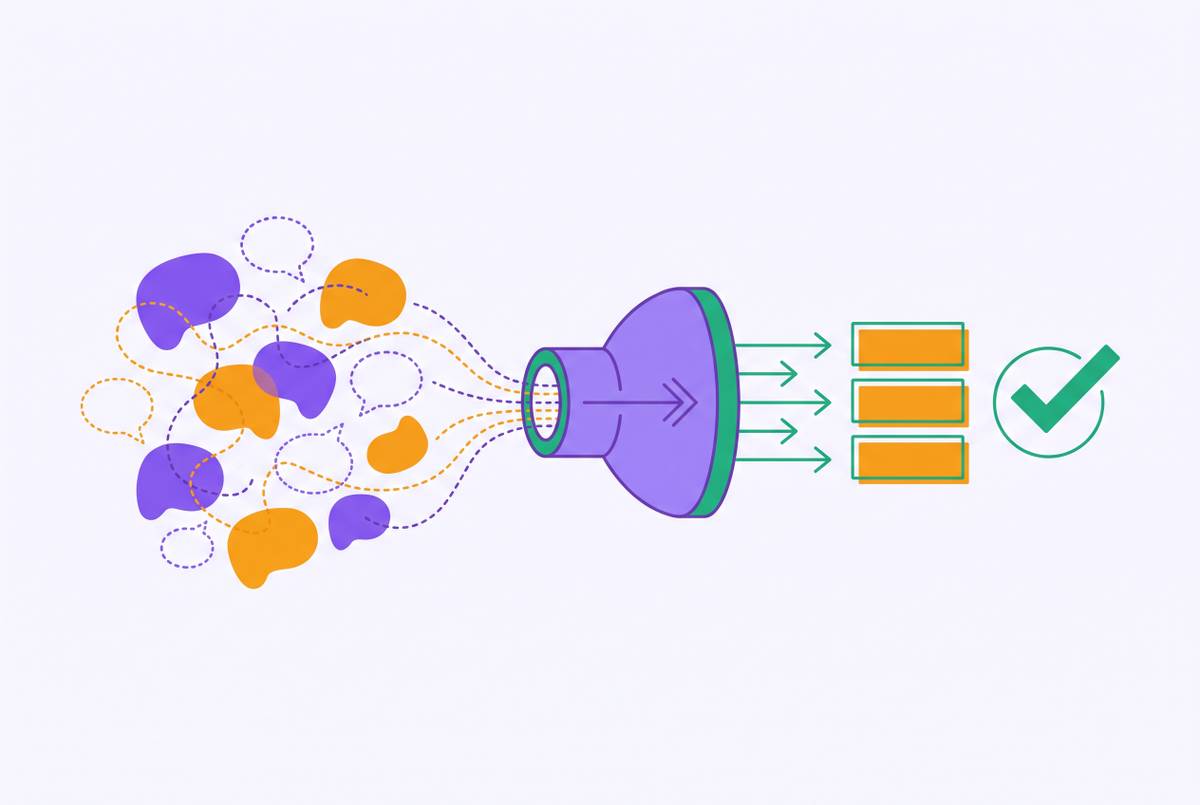
AI task ambiguity resolution means working out the goal behind a request, including constraints and preferences the person has not spelled out. For employees who do not write perfect prompts, personal intelligence draws on accumulated context, recognizes relevant patterns, and leaves the person in charge when an inference needs correction.
Why work requests are structurally underspecified
A manager suggests doing X, presenting it as what they would do in the employee’s position. The words sound like an option. Yet in a workplace where much is communicated through shared understanding, the employee may be expected to hear a direction. The request leaves its force unstated, relying on the relationship and the situation to supply it. A receiver who treats it as a casual suggestion can understand every word and still miss the point.
This is structural underspecification. Human language depends on speakers leaving out information they think the listener already knows. At work, that information includes constraints, stakes, and the history behind a decision. Explaining all of it with every request would defeat much of the purpose of shared context.
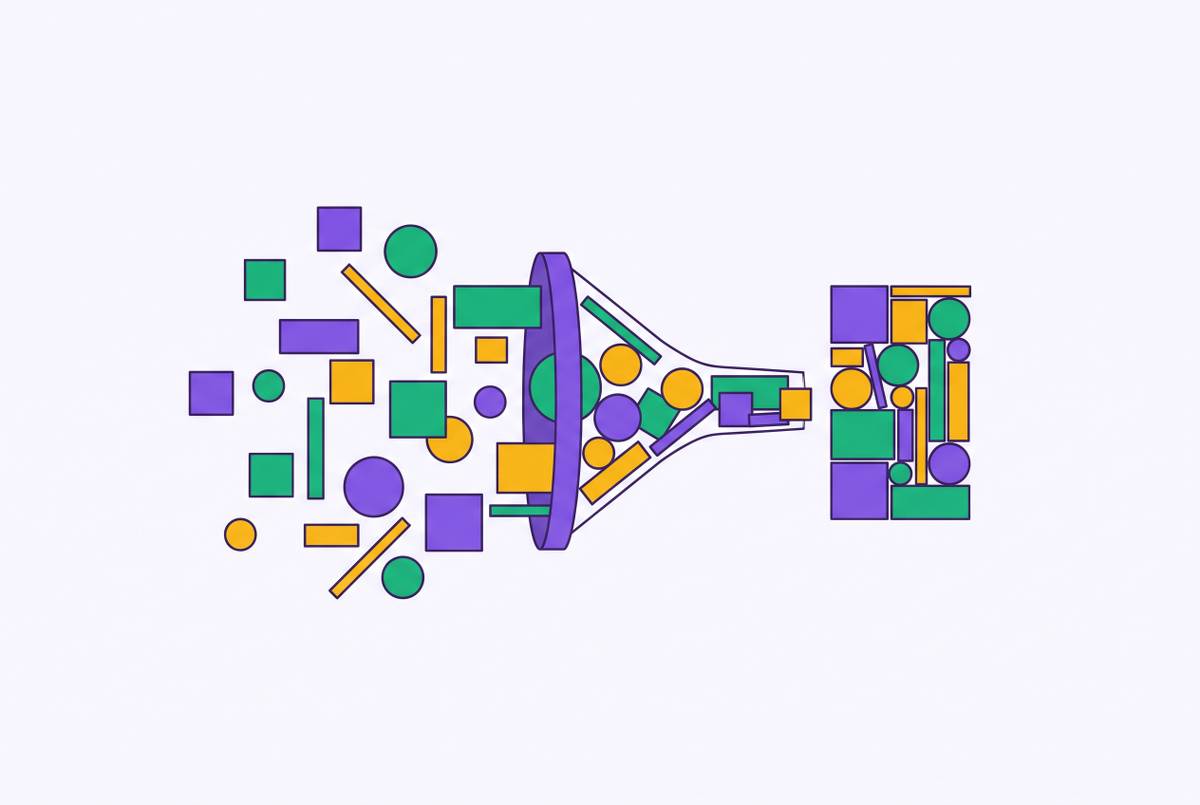
The same problem applies even when there is no delicate subtext. A person’s information needs can be temporary, personal, tied to the moment, and only partly expressed. The explicit intent is what the words ask for, while the implicit intent includes the goals and conditions that make an answer useful. The receiver must bridge that gap. For an AI assistant, following the sentence is therefore only part of fulfilling the request.
How badly current AI systems fail at implicit intent
Strong instruction-following scores do not necessarily show whether an AI can make that interpretive leap. A test that states every relevant condition gives the system a different problem from the one people bring to work. It tests obedience to a complete description. Real requests also test whether the receiver can recognize what is missing and discover which omissions affect the outcome.
Sirdeshmukh et al.’s Implicit Intelligence evaluation framework tested frontier and open-weight models across four categories of implicit need, namely Implicit Reasoning, Catastrophic Risk Avoidance, Privacy & Security, and Accessibility. The best-performing model achieved only a 48.3% pass rate. The same models score near the top on established reasoning benchmarks, so it is hard to explain the difference as simply an inability to reason. The result suggests that inferring unstated needs is a distinct capability rather than an automatic benefit of stronger general intelligence.
Those categories also show why the gap is more than a problem of tone. Missing an accessibility requirement or a privacy boundary is different from using words that a user dislikes. An answer can satisfy the visible instruction while failing a condition the user reasonably expected it to respect. Literal success can still be practical failure.
But could the evaluation be asking too much? People can clarify their requests, and no colleague understands every implication immediately. That objection would be more reassuring if users reliably reported misunderstandings in a form the system could use. Evidence from actual assistant interactions suggests that the correction process is much less explicit.
Why dissatisfaction leaks out through follow-up prompts rather than explicit complaints
Nam, Salawa, and Chandra’s ICSE NIER 2026 study examined usage logs from 372 professional developers interacting with Google’s internal Cider Chat assistant. The researchers found that a follow-up prompt often does two jobs. It gives the assistant a new instruction while also conveying feedback about the response that came before it. Frustrated or corrective wording can signal that the previous turn did not meet the developer’s needs.
The study’s sentiment-analysis approach surfaced implicit satisfaction signals at a rate more than 13 times higher than explicit user feedback. Only 0.6% of interactions in the dataset included explicit feedback. That scarcity reflects a basic obstacle to in-flow ratings, which is that people have little motivation to interrupt their work to evaluate the tool. They are trying to finish something.
This changes how the next prompt should be understood. A correction is not only another task. It may also reveal which part of the assistant’s earlier interpretation was wrong, even if the person never labels the response unsatisfactory. A system that reads each message on its own can miss that link between turns.
The study concerns developers using one internal assistant, so its figures should not be treated as rates for every workplace tool. It nevertheless exposes a broader question for conversational AI. How much feedback is already present in the effort people make to get an answer back on track? Explicit ratings cannot answer that question alone, because the language of the next request may contain the more useful signal.
What "reading between the lines" actually requires from an AI system
Researchers define implicit intelligence as an agent’s capacity to identify, reason about, and satisfy requirements that users expect but never explicitly state. This calls for more than interpreting an isolated sentence. The system needs a running model of the person’s goals and a way to bring relevant evidence into the current decision. Without that, an interpretation that sounds right may be no more than a guess.
Kim, Jang, and Kim’s PACE benchmark, associated with EMNLP 2026, examines requests that sound reasonable alone but become inappropriate in light of the user’s circumstances. Their PaceMaker multi-agent framework tries to find the evidence that settles the matter in an egocentric knowledge base, which is organized around the user’s experience. It follows linked facts through multi-hop graph traversal and uses conflict-aware filtering to find hidden conflicts. The principle is straightforward even if the machinery is not. Unmentioned context must be sought.
PersonalAlign, introduced in January 2026, approaches implicit intent in graphical user interface agents through two layers, which are preference execution and proactive suggestion. Carrying out a known preference and suggesting something useful are different behaviors, but both aim to match the user’s true intent.
Personalization connects intent inference and preference modeling to the objectives, constraints, and trade-offs that govern a plan. As agents move from only following instructions to pursuing goals and responding to events, they must keep that link in place between requests. An action must both follow the latest prompt and fit the person’s current goal.
How does accumulated personal context help AI understand what you mean?
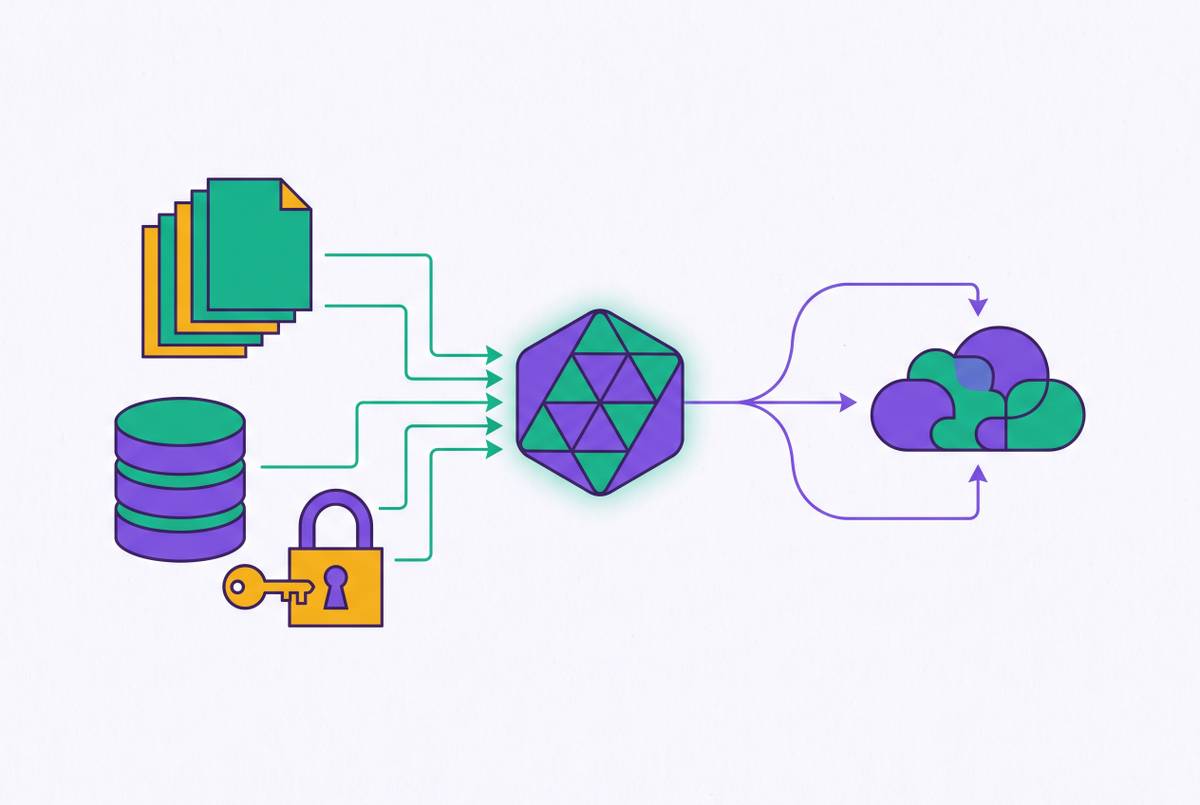
A system working from one session has only a narrow basis for interpreting what a person leaves unsaid. Accumulated context provides a different starting point. Communication patterns, recurring commitments, preferences, and previous decisions can help distinguish a likely need from a generic assumption. The useful information is not simply that something happened before, but how it bears on the request now.
A person may frame requests differently under time pressure, apply certain constraints without restating them, or repeatedly reject a particular kind of outcome. Those patterns give an assistant evidence to help it understand new wording. A brief prompt need not mean that the person has no further requirements. It may mean they expect the assistant to still understand their usual requirements.
This is what makes a personal intelligence layer different in principle from a tool that starts fresh each time. Its purpose is to connect what it knows about the person to what it does for them across work. Understanding a preference has little value if that understanding never changes a proposal or a plan.
The same context can also help interpret follow-up prompts. A corrective phrase is easier to understand when the system has a prior model of the person’s goals and communication style. Sentiment can reveal dissatisfaction, but it does not by itself explain what a satisfactory outcome would have been. Their history can help show what would have met their needs.
For employees who struggle to write detailed prompts, the relevant criteria are therefore contextual understanding, pattern learning, and the ability to anticipate needs while augmenting judgment. The relative performance of particular products remains unproven by these criteria. The intended payoff is less context-switching and less time spent reconstructing familiar background. The assistant uses what it has learned so the person can concentrate on what is new.
The real risk: accumulated context used wrongly
More context also creates more ways to be wrong. A stored preference may be stale, irrelevant, or at odds with what the person wants in the current moment. If an assistant activates it anyway, personalization becomes a source of error. Knowing more is not the same as choosing the right evidence.
The PACE research makes this problem harder than simply checking whether one remembered fact applies. In some cases, the conflict is distributed across several pieces of context and becomes visible only when they are considered together. Retrieving the wrong evidence can obscure that conflict. Equally, over-weighting an old preference can turn a reasonable present request into something the system incorrectly treats as inappropriate.
OP-Bench, introduced in 2026, targets over-personalization as a distinct failure mode. It shows that there is a need to test both how a system uses preferences and how well it remembers them.
Reading between the lines at work is partly a team skill, because the relevant understanding may be distributed among several people. One person’s context cannot take the place of a shared mental model. Among experts, unstated assumptions can be especially troublesome precisely because no one notices that they remain unstated.
Systems need better-calibrated context, using remembered information selectively. A system must distinguish between preferences that apply now and those that do not, while remaining open to correction. It must also avoid treating one person’s history as a complete account of a team’s needs. Preserving room for human judgment throughout the system’s reasoning is therefore part of accurate interpretation.
Where the capability boundary is moving and what it changes for users
The gap between human and AI performance is narrowing for specific reading-between-the-lines tasks, but that progress is uneven. Detecting a satisfaction signal is not the same as identifying the unstated condition behind it. Retrieving relevant context is not the same as judging whether that context should govern a decision.
The agentic benchmark results remain poor in areas central to work, including catastrophic risk avoidance, privacy, and contextual appropriateness. That limits what can reasonably be inferred from progress on a narrower task. An assistant may become better at noticing that something went wrong without yet being dependable at preventing the error. Better interpretation does not justify unrestricted autonomy.
This distinction matters more for goal-directed agents because they are responsible for more than a single exchange. A running model of the person’s goals must be updated rather than preserved as a fixed account of what they always want. Each new request can add evidence or challenge an earlier assumption. Personal intelligence requires that openness to change.
The right design target is augmentation. A personal intelligence layer should bring forward what the person likely needs, flag conflicts, and make suggestions while leaving the choice to the user when it calls for their judgment. That approach makes context useful without turning inference into authority. It also gives the person a way to correct an interpretation without rebuilding the entire background of the task.
For the user, the difference should be felt in the next ordinary request. Instead of repeating a familiar constraint or explaining again why an earlier kind of answer was unsuitable, they can address the part of the situation that has changed. When a conflict appears, the assistant brings it forward for a decision. Their attention goes to the choice only they can make, rather than another round of explaining what they meant.
Sources
- Reading Between the Lines: Scalable User Feedback via Implicit Sentiment in Developer Prompts
- [2602.20424] Implicit Intelligence -- Evaluating Agents on What Users Don't Say
- Reading Between the Lines: Scalable User Feedback via Implicit
- Reading Between the Lines: Scalable User Feedback via Implicit Sentiment in Developer Prompts
- PACE: Towards Surfacing Hidden Conflicts in User Requests