How Fuzzy Communication Becomes Clear Action Inside an AI Work Assistant
Ambiguity requires systems that ask clarifying questions, not just better prompts.
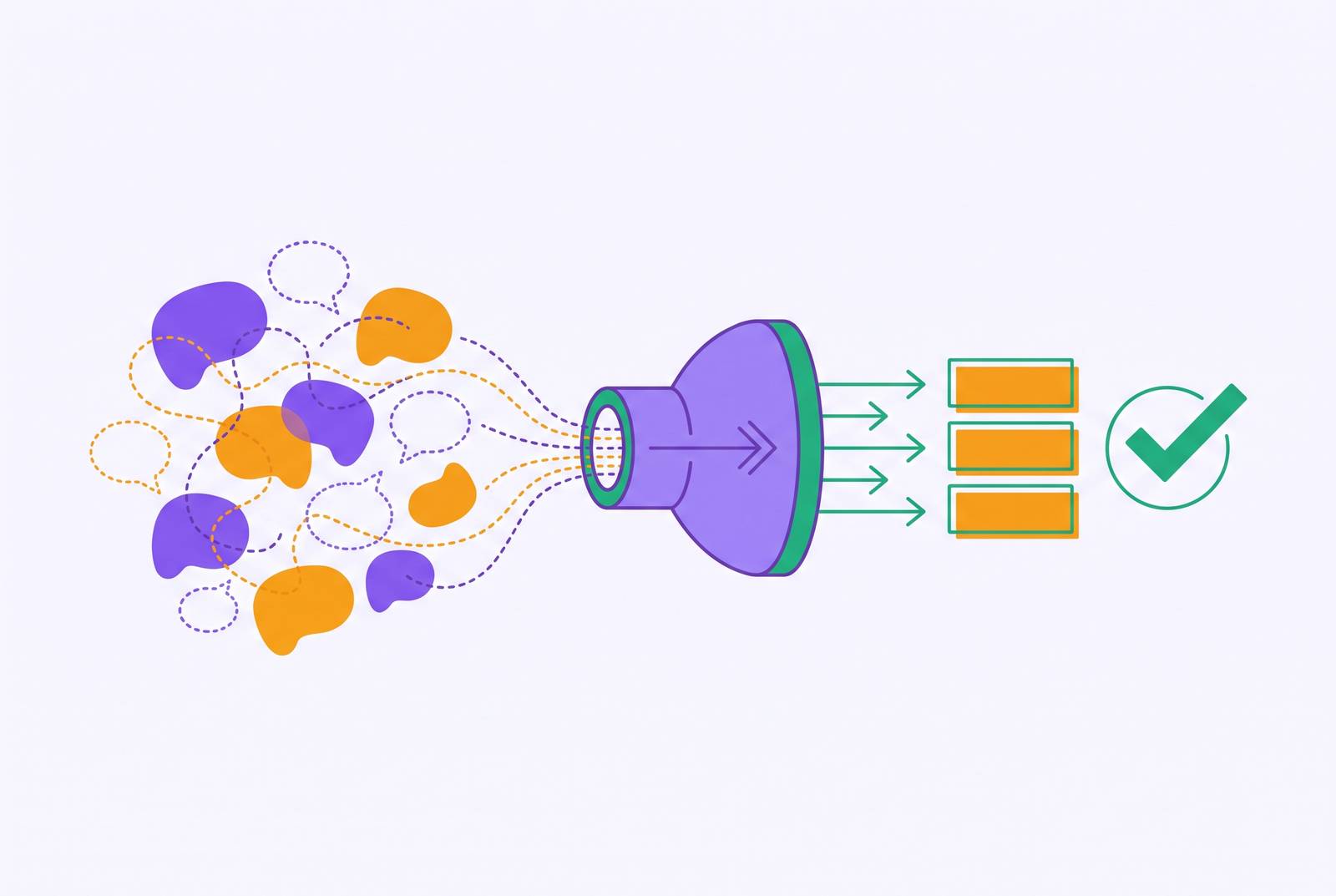
An AI work assistant handles fuzzy requests reliably by interpreting intent, connecting relevant context, checking the details needed for action, and asking targeted questions when uncertainty remains. Employees should not need perfect prompts to use it. The quality of an assistant depends on this interpretive layer between what someone says and what the system does.
Why natural language is structurally ambiguous, not just imprecise
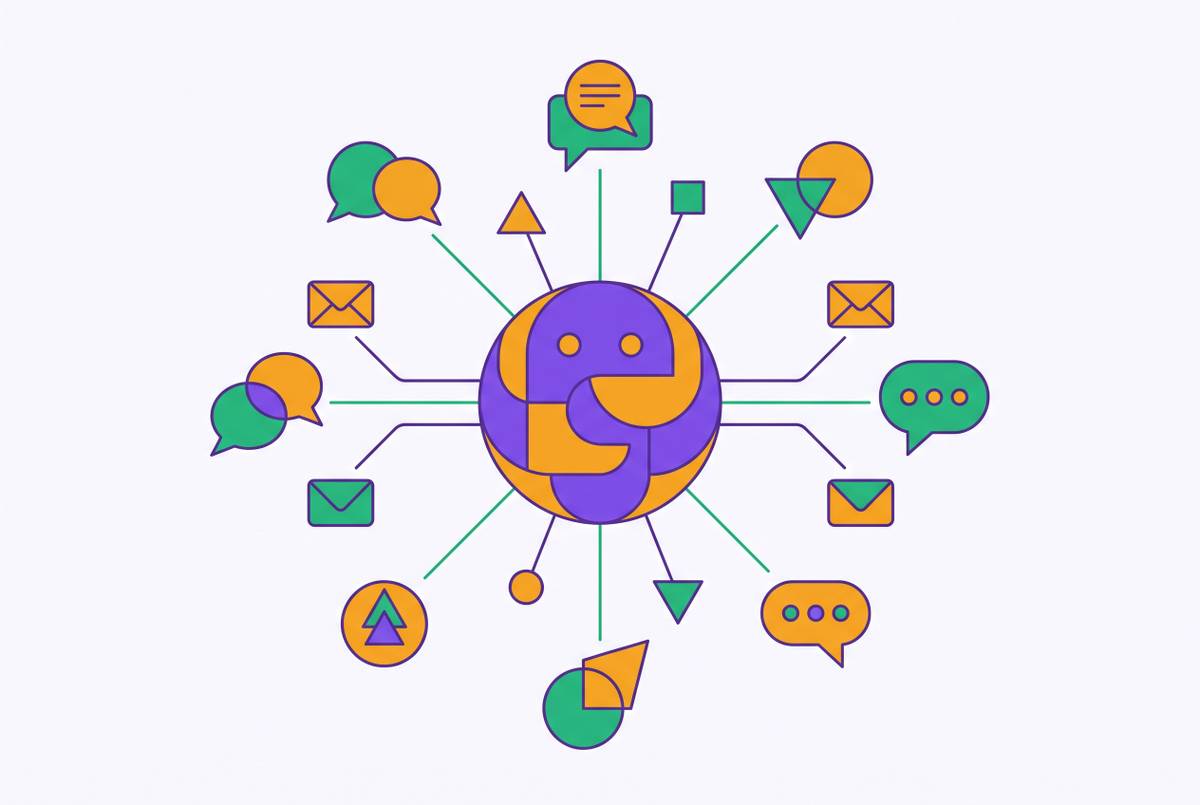
“I can't log in,” “My account isn't working,” and “I'm locked out” are three different messages that express the same intent. A keyword matcher has different words to work with in each case, even though the user needs the same kind of help. A system that knows only set phrases cannot reliably understand requests when the wording, tone, and context change.
The reverse problem is just as important. The same words can support more than one valid interpretation, so recognizing a phrase does not settle what action should follow. People routinely leave parts of their meaning unstated because conversation allows them to rely on shared context. They may not realize that a request is ambiguous, or know which capabilities and constraints affect the assistant’s interpretation. What seems obvious to the speaker may be unavailable to the system.
This makes ambiguity a structural feature of language. Better wording can help, but the assistant still has to work out what it means. The assistant must distinguish between different expressions of one goal and similar expressions of different goals. That is the problem natural language understanding, or NLU, has to solve before automation begins.
How the NLU pipeline converts a raw utterance into a structured intent
Input processing begins with the user’s raw message. Tokenization breaks the input into units for processing, while cleaning up typos, filler words, and inconsistent formatting helps expose the underlying meaning. In voice systems, speech-to-text supplies the words that later stages interpret. Errors here can constrain everything that follows.
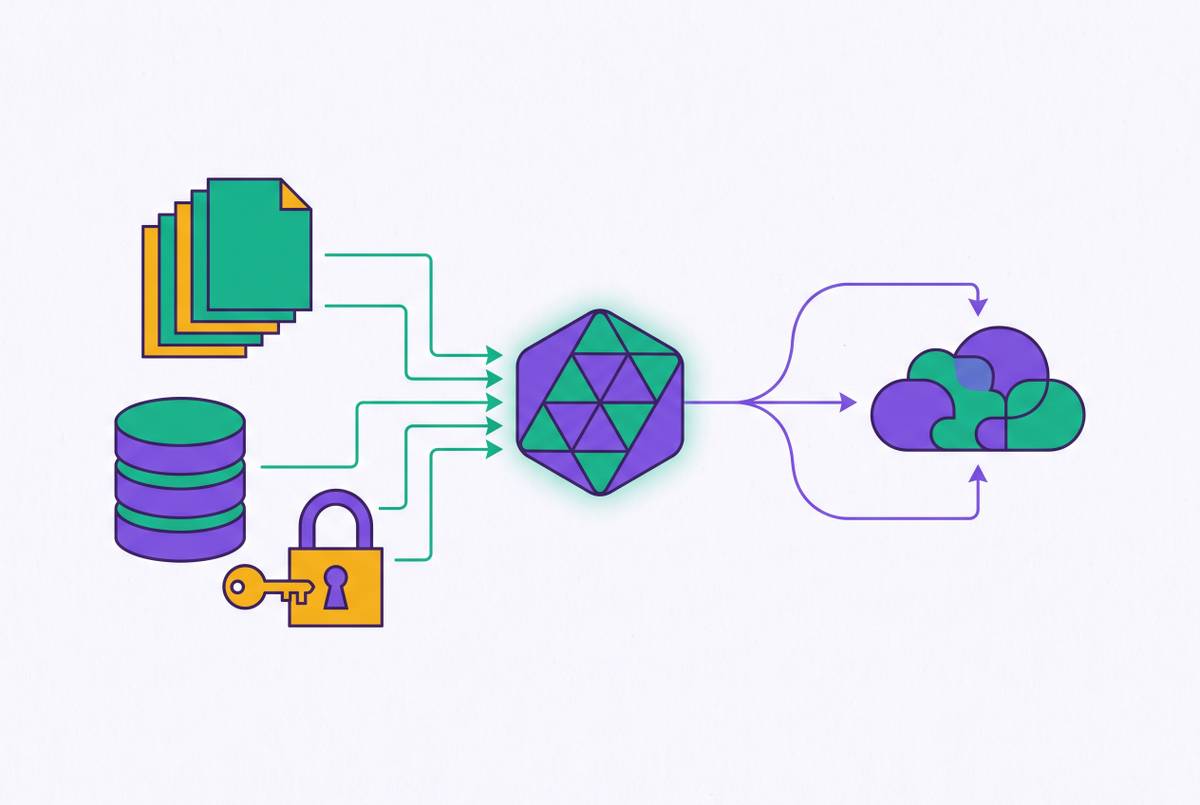
Context enrichment then brings in information from outside the current sentence. Prior conversation turns, relevant user data, and the channel where the message originated help establish what the person is referring to. Consider “Where is my order?” That message can map to different intents depending on whether the person has just placed an order or is a first-time visitor. Context threading links the current request to earlier turns so that each message builds on what came before.
Intent classification uses that enriched input to identify the user’s goal. Modern LLM-based classifiers trained on real interactions can recognize meaning across paraphrases, slang, indirect requests, and incomplete sentences. Confidence scoring then estimates the probability that the classification is correct. High confidence can permit automated action, while low confidence can trigger clarification or human escalation.
These stages need separate tests because they fail differently. A word-perfect transcript can produce the wrong intent, while a slightly garbled one can still yield the correct interpretation. A single accuracy score would obscure that distinction and make it harder to locate the actual failure.
Why intent alone is not enough — slot-filling and entity extraction
An assistant may know what kind of task the user wants but still need a date, amount, account reference, or policy name. Slot-filling provides these structured parameters so the assistant can carry out the action. The intent establishes the kind of work involved. The slots establish the particulars that make that work executable.
Entity extraction pulls those values from the message, but extraction alone does not confirm them. Normalization converts the values into a canonical form, and validation checks them against systems of record. All three steps must pass before an entity is treated as confirmed. A confidently extracted but incorrect account number can lead the assistant to act on bad data while appearing to have understood. Spoken input adds another risk because numbers and names that sound alike can lead to entity errors even when the intent is correct.
This distinction also helps prevent an intent taxonomy from proliferating unnecessarily. Different dates or account references are parameters, and the goal can stay the same when they change. Treating each variation as a separate intent confuses what the user wants with the details of that request. Every actionable intent should instead map to an action, an owner, and a confidence threshold. If a category cannot specify what the assistant does when it fires, it serves as a reporting label.
How disambiguation works when confidence falls short of a threshold
The ADEPTS framework from FAIR at Meta names disambiguation as a core capability of human-centered agents. That framing makes clarification part of the design, rather than a fallback added after misunderstandings appear. Uncertainty calls for a targeted question grounded in domain knowledge. A generic request for more detail can leave the user guessing which part of the task needs explanation. The question should narrow the unresolved choice.
ECLAIR takes this connection between ambiguity and questioning into its architecture. Earlier sequential pipelines first detect ambiguity and then generate a question, separating two tasks whose results depend on each other. ECLAIR integrates enterprise knowledge graphs and classifiers so that context informs what it asks the user to clarify. Its demonstration paper reports superior performance in ambiguity detection and clarification question generation on real-world data from the Adobe Experience Platform AI Assistant.
How often should the assistant interrupt the user? That depends on the operational confidence threshold. Escalating too readily erodes the efficiency that justifies using an assistant, while escalating too rarely permits confident action on the wrong interpretation. Good disambiguation requires both a useful question and a sound decision about when to ask it.
What context fragmentation does to the NLU pipeline in real enterprise deployments
In an enterprise deployment, even a well-designed pipeline may receive only part of the relevant picture. Work crosses platforms, but an assistant’s visibility is bounded by its environment. An assistant that can summarize activity in one platform may have no access to activity in another. Neither view necessarily represents the whole task. Intent classification can therefore work correctly on the available context and still produce an action that does not fit the wider situation.
Microsoft Copilot’s SharePoint search illustrates a related problem with the scope of available context. Broad permissions, rather than a failure to understand language, led it to reach content that users technically had permission to access but did not know existed. Gemini’s Workspace sidebar, which reads across Gmail, Docs, and Drive, raises the same question about stale or overly broad permissions shaping what counts as relevant context. These examples concern context architecture.
More context is not automatically the right context. Missing access can exclude relevant work, while overly broad access can bring unrelated material into the interpretation. Correcting these boundaries requires organizational decisions about data access. Otherwise, an agent may reinterpret an ambiguous instruction in a way that technically complies with its inputs while undermining the organization’s objective. The failure lies in what the assistant can see and use, even when its language understanding is sound.
Why overconfident output is more damaging than a failed understanding
The assistant can recognize the intent, produce a fluent response, and then act on an unvalidated detail. An error message exposes a problem before work proceeds. A confidently wrong action can conceal the need for intervention.
This calls for better calibration. A longer answer does not make an uncertain interpretation more dependable, and an assured tone does not establish that the required checks passed. The assistant needs to recognize when the user requires verification. That becomes more consequential as the scope of action expands. A small ambiguity in language can support a large departure from the intended outcome if the agent is free to act broadly.
ADEPTS names transparency as a distinct capability, requiring an agent to communicate what it is doing, why, and where it is uncertain. Those explanations belong in the user experience. They give the person a chance to assess the interpretation before accepting its consequences.
Why the underlying process must be standardized before NLU can act on it reliably
NLU turns a request into a structured goal, but it cannot provide an agreed way to do the work where none exists. If ownership is unclear, identifying the task correctly does not identify who is responsible for it. If approvals are poorly defined, understanding the request does not establish how it should proceed.
Standardization therefore has to precede automation. A process that cannot be clearly described and documented cannot be executed reliably by an agent. Adding AI can accelerate duplicated reporting, slow approvals, or scattered communication. Language understanding is an interpreter of the process.
Gartner forecast that a significant share of agentic AI projects will be canceled by the end of 2027. The organizational implication is to redesign operations for agents, with suitable architectures and robust orchestration frameworks, rather than simply layering automation onto old workflows. Restraint applies to the technical design as well. Anthropic and OpenAI advise starting with a single-agent loop and adding multi-agent hierarchy only when simpler ways fall short or agents keep struggling with complex instructions or tool selection. More components cannot compensate for an unclear action path.
How should an AI work assistant understand employees without perfect prompts?
The design priority is to make uncertainty manageable at each stage, rather than demand that employees eliminate it before speaking. Input processing, context enrichment, intent classification, entity extraction, and confidence gating need separate tests. Otherwise, a single measure of “understanding” hides whether a failure began with the words, the context, the goal, or the parameters. Fluent output alone cannot provide that diagnosis.
Clarification should draw on domain knowledge before the question is formed. That lets the assistant ask about the unresolved choice instead of requiring a non-technical user to rewrite the whole request. Context architecture also needs deliberate boundaries, with permissions and integrations defining which information the assistant can use. A unified context layer can reduce fragmentation, but its usefulness still depends on appropriate access.
Finally, calibrated confidence and transparency should be visible to the person using the assistant. “I'm not certain — do you mean X or Y?” gives the user an answerable choice where a confident guess would take the decision out of their hands. The assistant should make the basis for its interpretation understandable and its uncertainty explicit.
Sources
- ADEPTS: A Capability Framework for Human-Centered Agent Design
- A Survey of Joint Intent Detection and Slot Filling Models in Natural Language Understanding
- A Multi-Agent Framework for Interactive User Clarification ...
- Structured Uncertainty guided Clarification for LLM Agents
- Fewer Clarifications, Better Code: Benchmarking Cross-Session Personalized Ambiguity Adaptation in Coding Assistants