Why Your AI Assistant Forgets You Every Morning and What Persistent Memory Actually Fixes
Without persistent memory, you must restart setup every session.
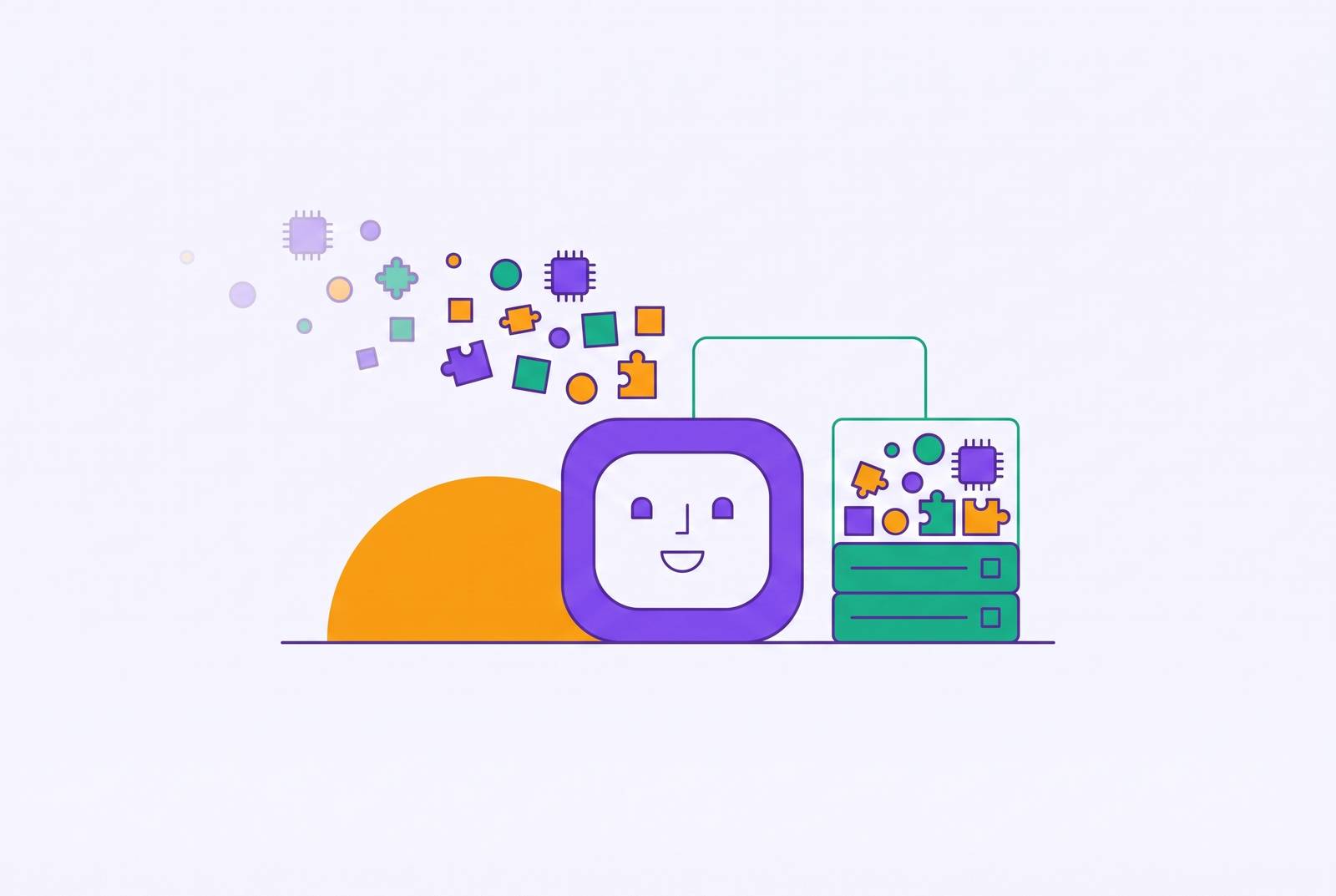
A persistent-memory AI assistant for knowledge workers needs more than a long conversation window. It needs a separate layer that retains useful project facts, preferences, and workflows between sessions, then retrieves them when needed. That fixes repeated setup, but it creates a new responsibility too, because useful memory must be open to inspection, correction, and deletion.
Why the blank-slate experience is not a flaw in any particular product
A new session begins with the same explanation. You describe your role, name your stack, restate your preferences, and explain the project’s constraints before the assistant can help. Yesterday’s conversation may have established all of this, yet today’s exchange starts without it. The repetition feels like a product failing to learn. Its underlying cause, however, is the separation between a model’s temporary working context and anything the surrounding application saves.
An LLM has no persistent conversational state of its own. Its active context contains the system instructions, tool schemas, and conversation turns available for the current response. When that session context clears, those details do not automatically become lasting knowledge about you. An application can supply saved information to a later session, but that requires storage and retrieval outside the model. A better prompt cannot create that missing layer.
Always-On Agents: A Survey of Persistent Memory, State, and Governance in LLM Agents describes the operative system as including “retrievable memories, but also task ledgers, permissions, credentials, commitments, provenance and audit records.” That is much more than a transcript. It includes what an agent has agreed to do and what it is allowed to act on. None of that survives by default in a stateless LLM, which makes continuity an architectural choice.
Why a larger context window does not solve the problem
Could the assistant simply keep a longer conversation open? A larger context window lets more material fit into a session, but it does not make that material durable across sessions. It also leaves a retrieval problem inside the window. The advertised maximum is not necessarily the amount a model can use reliably on a difficult task.
Research on the “Lost-in-the-Middle” pattern documents how information in the middle of a long context becomes harder to surface. Long contexts also take a lot of computing power, so keeping every note, document, and tool result in active attention costs more than choosing the information the task needs. Size can postpone pressure on the window without resolving how the system chooses what deserves attention.
The BEAM benchmark, presented at ICLR 2026 after its October 2025 preprint release, “cannot be solved by simply expanding the context window.” Context is temporary attention within a session. Memory is durable state that can be retrieved and updated across sessions, and a larger container for the former does not become the latter.
What persistent memory actually is as an engineering component
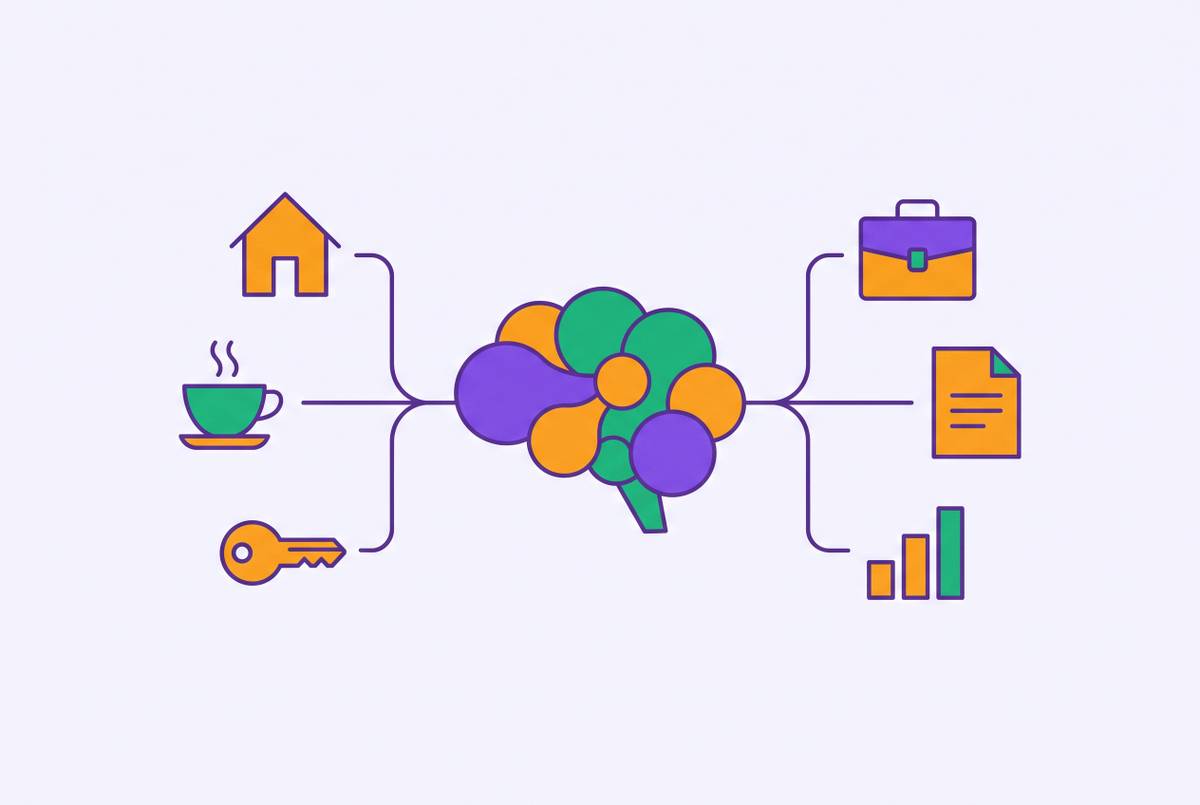
Persistent memory is a dedicated layer outside the context window. It stores information between sessions and brings selected material back into active context when a task needs it. The model need not attend to everything at once. This works like an operating system moving information between RAM and disk, with explicit calls that move information between memory tiers so it need not all stay active at once.
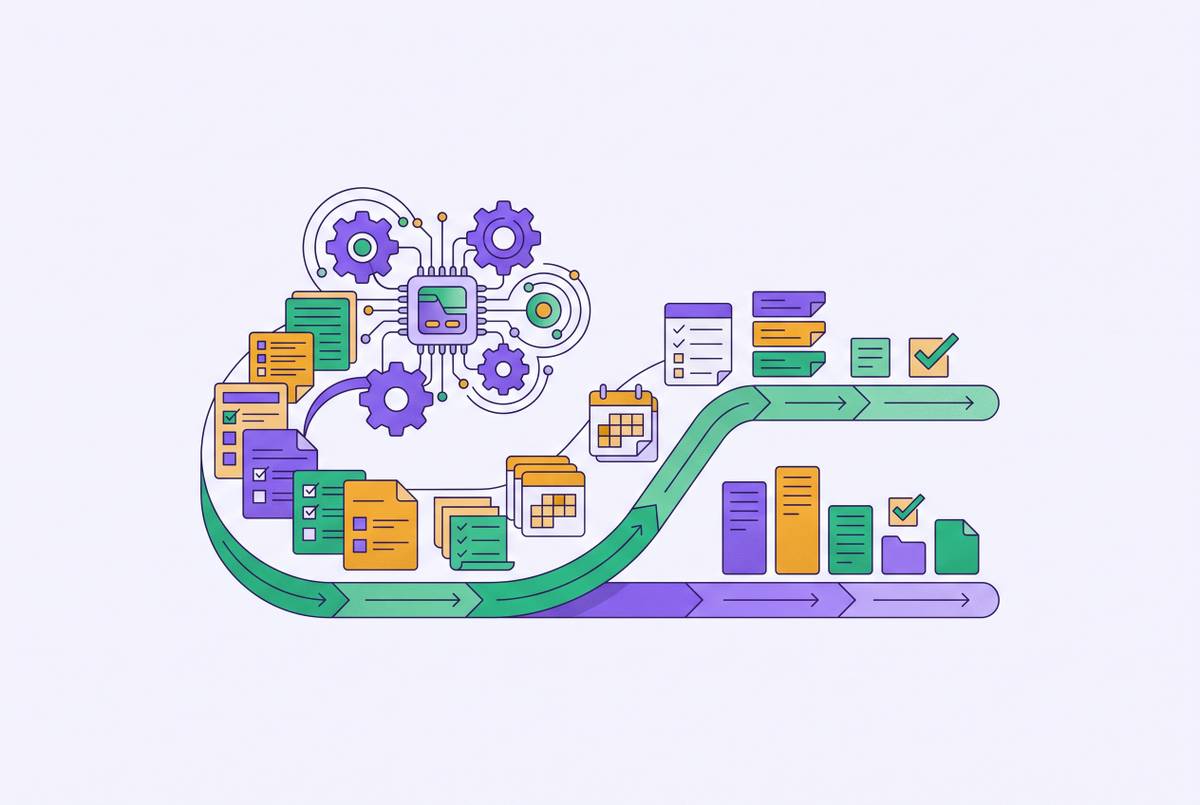
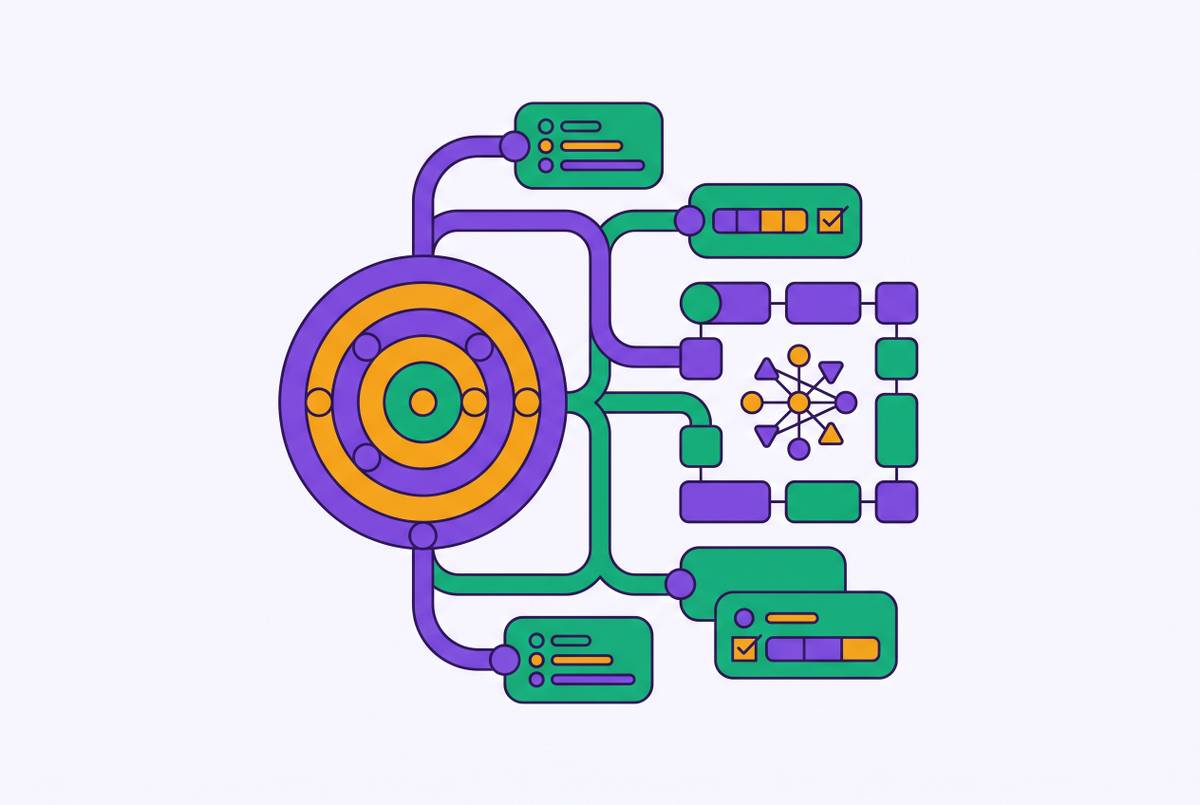
The always-on agents survey distinguishes four memory types. Short-term, or working, memory is the active context for the current session. Episodic memory records past events, interactions, and outcomes, while semantic memory stores facts, preferences, domain knowledge, and rules. Procedural memory captures skills and repeatable workflows. These categories separate remembering what happened from remembering what is true or how to do something.
The distinction changes what good retrieval looks like. A question about a project may need its current constraints. A repeat task may benefit from a saved workflow.
LoCoMo evaluates conversational recall, while LongMemEval tests handling of changing facts. BEAM addresses extreme-scale retrieval, DolphinBench examines memory-guided tool use, and STATE-Bench tests improvement through repeated enterprise workflows. There is no single memory skill here. A system that recalls an old conversation well has not thereby demonstrated that it can update a changed fact or reuse a workflow reliably.
What persistent memory concretely fixes for daily users
Instead of explaining a role and project again, the worker can begin with the task that has changed. This reduces reliance on expert prompting, which otherwise rewards people who know how to rebuild context efficiently. Memory-enabled systems can spread those gains more evenly by making continuity part of the tool.
The friction extends beyond introductions and preferences. Meeting summaries can drift when they give too much weight to what was said at the start, while specifications can fail to agree as pasted notes, retrieved documents, and chat history compete for the same window. Tool output can also flood a prompt and stall an agent workflow. Selective memory means less of the history a task needs has to stay in the window all the time. It does not, by itself, guarantee a faithful summary or a correct specification.
Rakuten reported lower costs and improved latency after deploying Anthropic’s memory layer. Its reduction in first-pass errors was 97%, making the benefit more concrete than a general claim about personalization. Wisedocs reported faster document verification workflows. A Financial Controller Agent using Google Gemini’s memory reduced expense submission time by more than half by remembering each employee’s expensing habits. These examples concern different tasks, so they are evidence of useful continuity.
Databricks Agent Memory, built on MemCurrent and released in beta October 20, 2026, illustrates workflow reuse. In one internal session, an agent needed 11 tool calls, eight subagents, and nearly six minutes to answer a question about a product’s top customers. After saving the workflow, a related follow-up needed two tool calls and 41 seconds. The benchmark has not been independently reproduced. Its relevance is the work avoided on a related question.
How memory changes the calculus when multiple agents work together
A development agent that learns a coding standard should improve the work of a review agent reading the same store. What a sales agent learns about customers should help a support agent, and support issues that keep coming up should reach the product team’s agent. One agent’s useful learning can become another’s starting point. That reduces repeated discovery only if the shared information is trustworthy.
The survey treats task ledgers, commitments, permissions, and provenance records as part of the operative system. This gives coordination a concrete foundation. Agents need not just common facts but a dependable account of what has been agreed, what has happened, and who can act. Shared memory therefore becomes part of how work is organized.
Anthropic released Memory for Claude Managed Agents in April 2026. Google Cloud released Memory Bank on April 22, 2026, and OpenAI’s enterprise memory improvement came out on June 25, 2026. These releases signal that persistent memory is becoming a baseline expectation for enterprise agents. Yet the same mechanism that distributes a useful lesson can distribute an outdated or corrupted one. Shared memory is also a shared attack surface.
The security risks that persistent memory introduces and why they outlast any single session
A reset can clear malicious instructions from temporary context. It cannot clear them from a separate memory store. If an attacker gets a harmful instruction saved there, the agent may retrieve it later while doing work that is otherwise legitimate. Memory poisoning changes the duration of the risk because the planted state survives the session in which it entered. It can also reach other agents that read the same store.
Mind Your HEARTBEAT! Claw Background Execution Inherently Enables Silent Memory Pollution, published in March 2026, shows how an Exposure → Memory → Behavior pathway works. Misinformation that an agent comes across during routine background activity enters session context, gets saved through its usual memory behavior, and shapes its answers in fresh sessions. The study did not require direct prompt injection. Ordinary social misinformation with social signals that made it look credible was enough to pollute memory through that pathway.
The same paper found that context pruning was not a reliable defense. The pollution carried over to new sessions even when the manipulated material was mixed with harmless content and passed through the system’s filtering. This exposes a distinction between tidying context and validating memory.
Consider the fraud scenario of a support ticket asking an agent to remember that invoices from a particular account should go to an external payment address. Weeks later, a legitimate invoice could cause the agent to act on the saved instruction even if the attacker had no further access. This is an illustrative scenario. MINJA, presented at NeurIPS 2025, showed this risk by poisoning agent memory through ordinary queries without direct access to the store. The rules for who can write to memory and how need to be checked along with those for access to the database.
Why the governance layer is the part most organizations are skipping
The tooling for accumulating memory is ahead of the tooling for governing it. The survey finds that research concentrates more heavily on storing and retrieving state than on governing, recovering, or relinquishing it. Production deployments show the same imbalance. A system may be good at remembering while lacking clear rules for when a memory becomes invalid, who can use it, or how to undo it.
Staleness is the simplest example of this gap. A fact saved six months ago may no longer be true, yet without expiry or review it can still guide a decision. Agents can have trouble working together when they use versions of shared state that do not agree. UC Berkeley’s 2025 MAST study found that roughly 37% of multi-agent failures were coordination failures, a category dominated by state synchronization issues such as inconsistent shared state. That shows why shared-state quality deserves attention.
Accumulation also creates scope and retention problems. Keeping information after it is no longer useful can lead to trouble under privacy regulations. In multi-user or multi-tenant systems, unclear rules for who can access what can let one user’s context appear in another user’s session. These are predictable consequences of durable storage without defined limits. They do not require an attacker to cause harm.
OpenAI’s June 2026 ChatGPT memory update let users delete their memory summary and turn off memory without wiping past conversations. That separates control over retained memory from control over conversation history. The broader gap is closable, but adding storage alone does not close it.
What should an AI assistant remember about projects and preferences between sessions?
A well-designed assistant remembers useful facts for an appropriate duration. It does not treat every exchange as permanent knowledge. For anyone choosing or building one, the relevant criteria are selective storage, retrieval quality, provenance, expiry, user control, and recovery. Those criteria distinguish an assistant that can recall a preference from one that can keep a project’s working knowledge current and accountable.
The Databricks architecture provides a concrete example of separating history from working knowledge. It keeps append-only episodic memory as raw session traces and mutable derived memory as distilled learnings in a structured knowledge base. A memory.md index that is generated automatically sits above that knowledge base. The design makes a useful distinction between preserving what happened and preserving an old interpretation as though it were still true.
Provenance gives stored information a basis for trust. A memory record should identify its source, when it was written, and the authority behind it. The survey’s six diagnostic axes are authority, scope, mutability, provenance, recoverability, and actionability. Together, they turn “the assistant remembers” into more precise questions about who supplied a fact, where it applies, whether it can change, and what actions it may justify.
Expiry and scheduled review keep yesterday’s knowledge from becoming an indefinite default. Inspection, correction, and deletion give users a way to challenge what the system has learned. Rollback goes further by allowing a memory write to be undone. Teams building AI workflow infrastructure are where these controls can be made dependable. Asking each user to maintain memory hygiene is a weaker substitute.
Choosing an assistant therefore depends on whether the user can see what it remembers, correct mistakes, and set boundaries on retention and use. A user who can inspect and revise the store remains able to direct the system, while a user who cannot is delegating judgment to an opaque record of the past.