Memory Techniques Used by High-Performance Knowledge Workers
High performers use learnable memory techniques that work with biology, not against it.
Walking out of a meeting and realizing three of the five decisions made inside it have already slipped away is what happens when biological memory meets a volume of information it was never built to hold. The piece this article makes is simple: high performers don't rely on raw recall. They use specific, learnable techniques that work with memory's actual limits.
Working memory is the bottleneck. It's the mental workspace where information gets held and worked on, and that workspace is tiny. George Miller's famous 1956 estimate put the limit around seven items, give or take two. Four. That's the entire active space available for juggling a client's name, the number they just quoted, the follow-up question forming in your head, and the thing you were about to say before someone interrupted.
Memory doesn't fail in one place. It fails in stages. It was never forgotten in the sense of being lost. It simply never got filed away to begin with.
Layering the forgetting curve on top of that worsens the picture. Information that isn't reviewed decays fast, often within a day or two. None of this is a personal failing. It's what unaided memory does under a volume and pace of information it didn't evolve to handle.
How biological memory encodes well
Before getting into specific techniques, it helps to understand what the brain is doing when encoding actually works. Encoding isn't passive. The brain doesn't simply receive information and store it the way a hard drive would. It builds connections, linking new information to things already there, to spatial surroundings, and to imagery vivid enough to stick.
The hippocampus sits at the center of this. The hippocampus's wiring for spatial navigation is why location-based memory techniques work. They aren't clever tricks layered on top of memory. They use a wiring that already exists for an entirely different purpose: finding your way around.
The brain is running a specific, measurable electrical pattern that scales with how much it's holding.
This is why elaborative encoding works as well as it does. Techniques that force the brain to actively pull information back out, rather than just re-reading it, build a far sturdier memory trace. Techniques that deliberately build those links, tying new information to something the brain already knows, produce memories that are richer and more durable than information learned in isolation.
Spaced repetition: the most evidence-supported technique for durable retention
Spaced repetition carries more empirical support than any other memory technique available to knowledge workers, with documented results in medicine, language learning, and professional analysis alike.
The method is simple to describe: review material at intervals that start short, maybe a day, then stretch out to weeks. A 2025 study in Frontiers in Medicine tested this exact approach with medical students, using digital flashcards over six months.
The results were clear. The group using spaced repetition scored 16.24 on a post-test, compared with 11.89 for the control group, a gap with a p-value below 0.0001. A majority agreed that spaced repetition made pediatric concepts easier to recall and gave them stronger long-term retention than the study methods they'd used before.
None of this requires understanding the spacing algorithm behind it. The domains where this pays off most are the ones that make up the bulk of knowledge work: technical vocabulary, procedural steps, case details, and the kind of itemized factual knowledge that's easy to recognize but hard to hold onto without review.
Chunking: reducing working memory load so complex reasoning becomes possible
Chunking doesn't make working memory bigger. It changes what counts as a single item inside it, which lets a small working memory handle information that would otherwise overwhelm it.
The mechanism is straightforward. By grouping related items under one higher-level label, the brain only needs to hold the label, not each individual piece underneath it. A phone number is the classic case: ten separate digits are hard to hold in mind, but the same number broken into three chunks is manageable. The information hasn't shrunk. The number of things the brain has to actively track has.
At work, chunking reduces the number of things a person has to actively track. Every task is still there, but now there are three things to track instead of twenty, and three fits comfortably inside a working memory that can only hold about four items at a time.
Chunking also builds judgment over time, not just capacity in the moment. Surgeons, engineers, and chess players don't re-analyze every detail of a situation from scratch. Experience, in this sense, is really a growing library of chunks. That's part of why seasoned professionals seem to think faster under pressure: they aren't processing more information, they're processing fewer, bigger units of it.
The method of loci: using spatial memory to carry information that would otherwise disappear
Roman orators used it to memorize hours-long speeches without notes, placing each point along a mental walk through a familiar building. The method of loci is one of the oldest memory techniques on record, and it has survived this long because it works with the brain's own architecture.
The technique itself is simple. Pick a route you know well, your home, your commute, a building you walk through daily, and mentally place pieces of information at specific points along it. To recall them, walk the route in your mind and "see" each item where you left it. This works because the hippocampus handles spatial navigation and memory formation using much of the same machinery, so attaching information to a place gives the brain a retrieval path that pure abstract recall doesn't offer.
The evidence for this isn't just historical. In Cody Herr's 2025 study conducted inside the intelligence community, analysts trained in the memory palace method, alongside elaborative encoding and a numeric mnemonic system known as the major system, scored far higher on recall tasks than untrained peers and held onto significantly more information a week later. The study gets its own full treatment further on; it stands here as direct evidence that an ancient technique produces modern, measurable gains.
The method has also made the jump into digital environments. Research on virtual reality memory palaces found that participants improved their recall of non-spatial information with a statistically significant gain after just a second use of a VR environment, suggesting the skill can be picked up quickly without years of practice. The obvious objection is that building a memory palace for routine information feels like overkill, and that's fair. The method of loci isn't meant to replace a notebook for everyday notes. It earns its place in high-stakes moments, a presentation, a briefing, a negotiation, when there's no notebook to check and the recall has to happen cold.
What the intelligence community's first memory training study reveals
The strongest evidence that memory techniques pay off professionally, not just in a classroom, comes from inside the U.S. Intelligence Community itself. Cody Herr, a senior analyst at U.S. Special Operations Command, conducted the first study of its kind: the first academic work to test memory tasks tied directly to intelligence analysis, the first memory study involving IC members, and the first to train memory strategies specifically to improve analyst performance.
Thirty IC professionals took part, split randomly into a training group and a control group. Those in the training group learned three techniques: the memory palace method, the major system for memorizing numbers, and elaborative encoding. The results were stark. Analysts who received the training scored 45% higher on recall tasks than the control group, held onto far more information a week later, and were far more likely to hit a perfect recall score.
What makes Herr's findings land harder is the gap they expose. A trainable skill directly tied to decision quality sits unused in an environment where decision quality is the entire job.
This isn't just an intelligence community problem. Law, medicine, crisis management, aviation, and corporate strategy all put professionals in the same position: absorb dense, high-stakes information quickly, retain it, and synthesize it under pressure. Those are precisely the conditions under which Herr's training produced its largest gains. An organization that skips memory training leaves a measurable performance gap in place that a few hours of structured technique could close.
Cognitive offloading and PKM tools
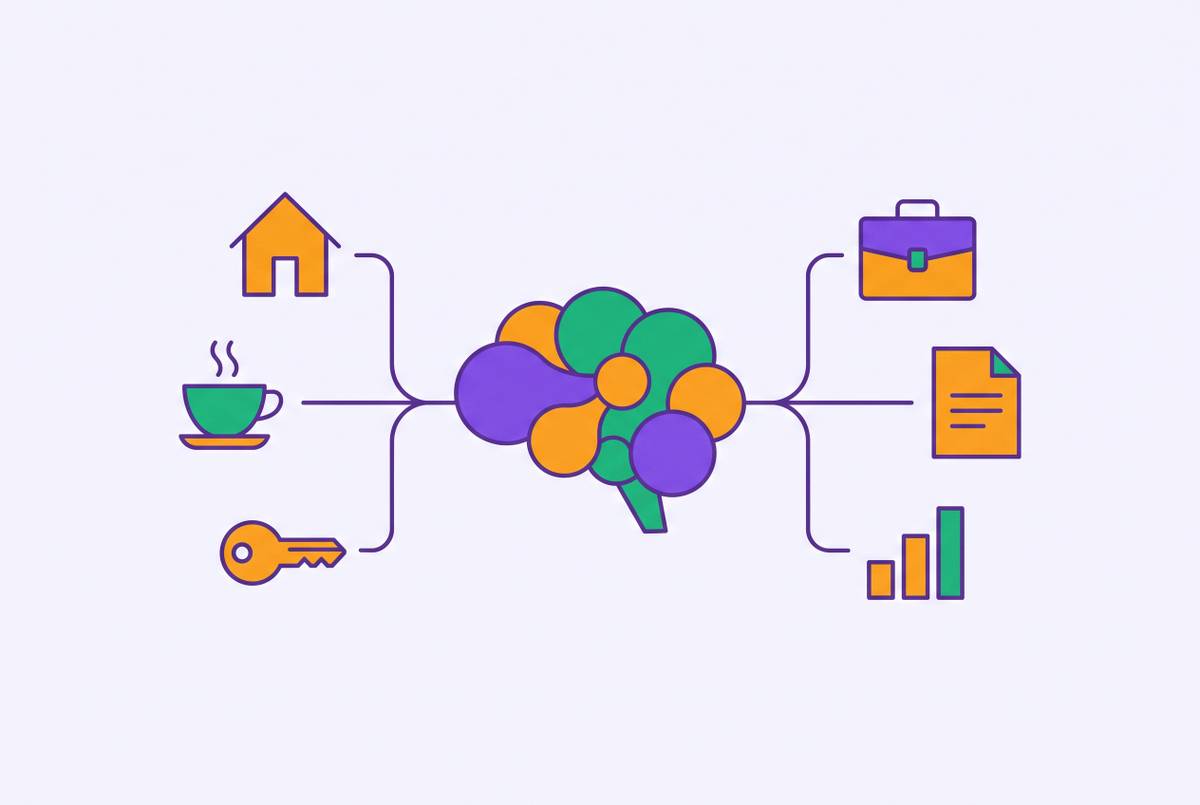
Memory doesn't have to live entirely in the brain to be useful. Offloading, deliberately handing storage and retrieval over to an external system, is a legitimate technique in its own right, not a shortcut around real memory work. Every piece of information parked in a trusted external system frees up a working memory slot that can go toward synthesis, judgment, and actual thinking.
The underlying principle is that working memory's limit is a bottleneck, not a reflection of intelligence. A personal knowledge management system exists to handle the first kind of task so the brain can focus on the second.
Tiago Forte's progressive summarization method, laid out in a 2017 blog series and expanded in a 2022 book, gives this principle a concrete process. A long article first gets filtered down with bolding on the most important lines, then further condensed into a smaller set of highlights, then boiled down to a brief summary at the top. The next time that note gets opened, the summary carries the weight the full original would have demanded, and the brain doesn't have to reconstruct the whole thing from scratch.
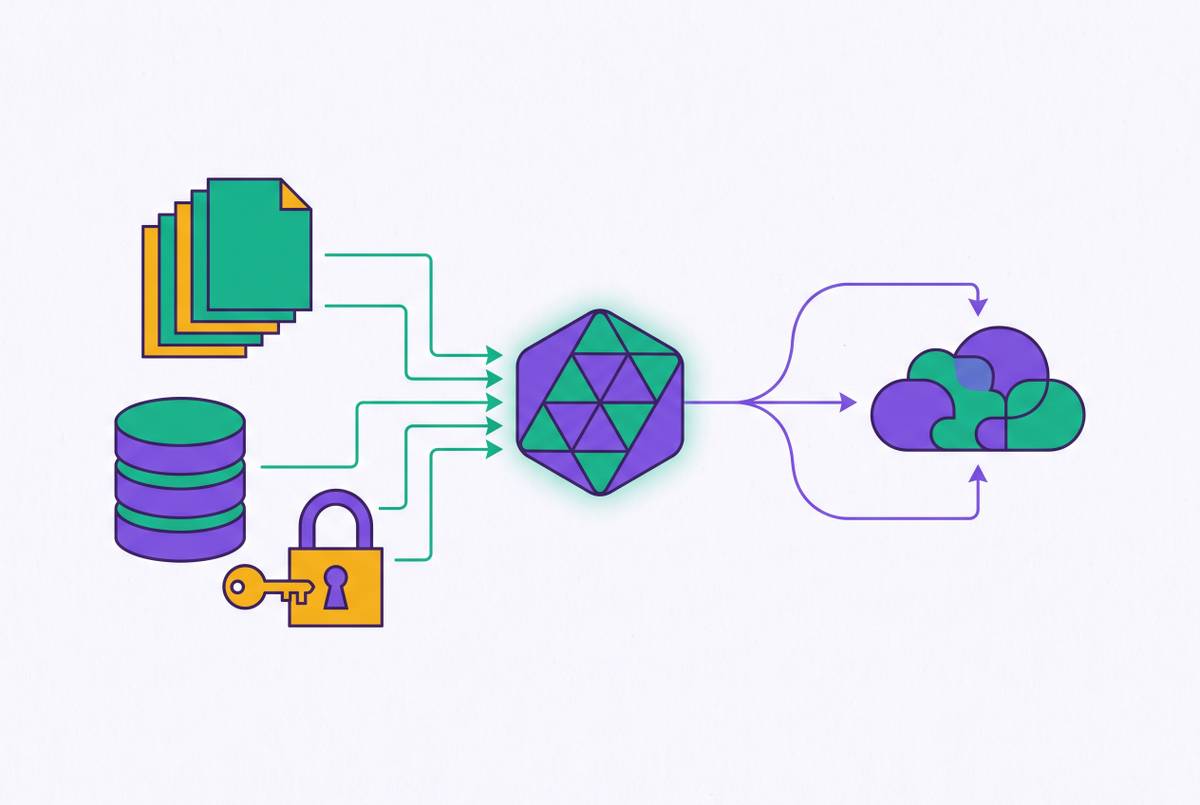
Some tools connect offloading directly to active recall as a single integrated habit. Newer AI-based retrieval tools are narrowing this gap further, combining knowledge graphs with cited synthesis across a person's own uploaded material, so a professional can query what they've already captured.
The atrophy risk: when offloading memory degrades the cognitive skills that tools cannot replace
The real danger in leaning on external memory systems is that the cognitive skills those tools replace weaken from disuse, and that weakening appears at exactly the moment a professional can least afford it: high stakes, no connectivity, nothing to check against.
The International AI Safety Report 2026 lays out two findings that make this concrete. A separate study found that heavier use of AI tools correlated strongly with lower scores on a self-assessment scale tied to critical-thinking behavior, and that cognitive offloading was the mechanism connecting the two.
Offloading frees up working memory for deeper thinking, which is exactly the point of using these tools well. The forgetting curve that spaced repetition fights applies to factual knowledge. It applies to cognitive skill itself, including the ability to think clearly without a tool open in front of you.
This risk lands hardest on intelligence analysts, physicians, and engineers working in high-stakes, low-connectivity settings, the same professionals for whom Herr's CIA study showed the largest gains from deliberate memory training. That overlap isn't a coincidence. The people who benefit most from strong native recall are often the ones with the least room to rely on a device when it matters.
Use external systems with the same intention applied to any other memory technique: offload routine storage, but keep practicing retrieval. AI and PKM tools should extend human judgment, not stand in for it. The goal is a system where external tools absorb the load that doesn't require judgment, while deliberate practice keeps the recall and pattern recognition that underlie real expertise sharp.
How to build a personal memory system
None of the techniques covered here compete with each other. Each one addresses a different stage of memory, from the moment information first arrives to the point months later when it needs to be pulled back out under pressure, and used together they do more than any single one could do alone.
The first move happens the moment information comes in: chunk it immediately, grouping incoming details into categories before working memory has a chance to get overloaded. That single habit, sorting a messy list into a handful of meaningful groups, buys room for everything that follows. And for everything else, the reference material that doesn't need to live in the head at all, a personal knowledge management system captures it with enough structure that it can be found fast later, acting as a layer under the first three and complementing all of them.
Individual habits matter, but they aren't the whole picture. Herr's research suggests the intelligence community should be building memory training into how it develops analysts, and AstraZeneca has already done something similar with personal knowledge management inside its own organization. Where training becomes part of how an organization operates, the gains compound across a whole team instead of staying locked inside one person's habits.
None of this works without the same discipline that any physical training regimen demands. Spaced repetition only pays off if the reviews actually happen on schedule. Progressive summarization only helps if the captured notes get revisited. The method of loci only gets sharper with repeated practice, not a single attempt. Consistency determines retention gains more than intensity does in every one of these techniques. And increasingly, AI tools that learn a person's recurring topics, common retrieval needs, and the gaps that tend to show up under pressure can act as a second layer on top of all this, surfacing the right piece of information at the right moment. That layer supports the techniques above, but building them in the first place still takes the work itself.
Sources
- Master Anything Faster: 5 Memory-Boosting Hacks for 2025
- Frontiers
- Memory Techniques in the Intelligence Community
- Implementation of a spaced-repetition approach to enhance undergraduate learning and engagement in paediatrics
- Method of loci training yields unique neural representations that support effective memory encoding
- Optimized virtual reality-based Method of Loci memorization techniques through increased immersion and effective memory palace designs: a feasibility study
- Memory Techniques in the Intelligence Community: A Tool for Improving Analysis? - CSI