Dopamine-Supporting Habits for Adults With ADHD
Understanding dopamine dysregulation explains which habits actually work for ADHD.
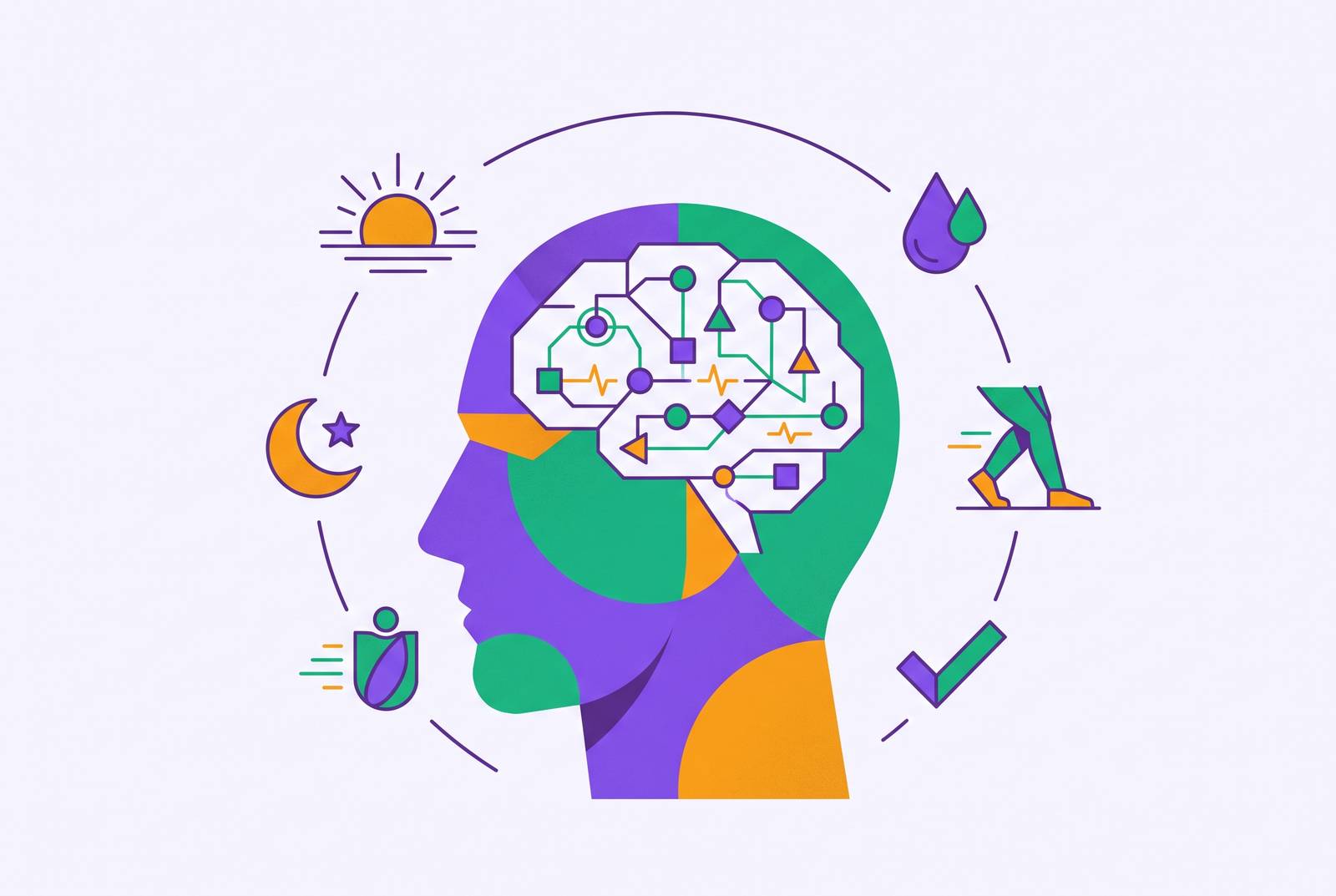
ADHD in adults involves a dysregulated dopamine system rather than one that's simply running low, unlike a car low on gas. It's a signaling problem: the transporters, receptors, and reward circuits that handle dopamine are wired differently, and that changes how motivation and follow-through actually work. Once the mechanism is clear, a handful of daily habits stop looking like generic wellness advice and start looking like targeted interventions, and at least one popular habit on that list turns out to deserve far less faith than it gets.
Start with the biology, because it explains everything that follows. Dopamine transporters, DAT for short, are the proteins that clear dopamine out of the synaptic gap after it's done its job. In many adults with ADHD, DAT availability runs lower than expected, which sounds like it should mean more dopamine hanging around. But the picture is messier than that. A 2024 study by Itagaki and colleagues, which won a PCNR award that year, found reduced DAT availability specifically in drug-naive adults with ADHD, meaning the finding wasn't muddied by prior stimulant use the way earlier studies were. That distinction matters: the dysregulation is there from the start, not a side effect of treatment.
DAT is only one piece of a larger puzzle. Receptor density and the brain's capacity to synthesize dopamine in the first place are also implicated, which points to a system running out of sync rather than one broken switch. Functionally, that shows up as reduced activation in the ventral striatum, the brain's reward-anticipation hub, during tasks that don't offer an immediate payoff. That's why someone with ADHD can hyperfocus for three hours on a video game and then can't make it through five minutes of paperwork. The dysregulation hits low-stimulation, delayed-reward tasks hardest. Call it a timing problem, not a motivation deficit.
That distinction matters at scale, too. Adult ADHD affects roughly 2.5% of the global population, and up to 70% of people diagnosed in childhood keep experiencing impairing symptoms into adulthood. So the logic driving this piece is straightforward: if the mechanism is dysregulated signaling rather than simple depletion, then habits that influence dopamine availability, receptor sensitivity, and synthesis capacity deserve to be taken seriously as biology, not folk remedy.
Why lifestyle habits are worth taking seriously as a complement to medication
Methylphenidate, one of the most common ADHD medications, works by blocking DAT, directly targeting the same dysregulated transporter system described above. That's precisely why stimulants are effective, and it's also why understanding the dopamine mechanism matters before reaching for any lifestyle fix. The goal is habits that work with that system, not against it or in ignorance of it.
But medication access has gotten harder to count on. More than 15.5 million adults in the surveyed country carry an ADHD diagnosis, and stimulant medications have faced supply shortages since at least October 2022. Nearly three-quarters of people taking these medications report the shortages have disrupted their access. In 2023, only around 33% of ADHD patients actually received stimulant treatment at all. That gap is substantial. It's a substantial share of the diagnosed population managing symptoms with a lot less pharmacological support than the standard of care assumes.
This is where lifestyle habits earn their place, not as a replacement for medication, but as a complementary lever. Drugs raise synaptic dopamine acutely, on a much faster timeline than lifestyle changes. Habits work on slower timelines: they shift BDNF (brain-derived neurotrophic factor) levels, adjust receptor sensitivity, regulate circadian rhythms, and affect how much raw material, like tyrosine, is available for dopamine synthesis in the first place. These are different levers on the same machine, which is exactly why combining them, rather than picking one, makes more sense than treating them as alternatives.
Most of the research behind these recommendations was done on children, and adult studies, especially those including women, remain comparatively thin. So what follows should be read as evidence-graded, not evidence-proven across the board. The next four sections move from the strongest evidence (aerobic exercise) toward more emerging territory (mindfulness), and that ordering is deliberate.
Aerobic exercise as the most robustly evidenced dopamine-supporting habit
Exercise affects the dopamine system on two different clocks. Acutely, each session triggers a release of catecholamines, dopamine and norepinephrine included, which is part of why a run or a swim can clear mental fog almost immediately. Chronically, regular cardio raises levels of tyrosine hydroxylase (the enzyme that converts tyrosine into dopamine's precursor) and BDNF, both of which are implicated in the neurochemical differences seen in ADHD. Over weeks, that supports synaptic plasticity in the prefrontal cortex, the region responsible for planning, impulse control, and sustained attention.
A third layer matters here too: exercise that demands sustained attention and quick decision-making, like martial arts or team sports, may train inhibitory control directly as a learned skill, not just a biochemical byproduct.
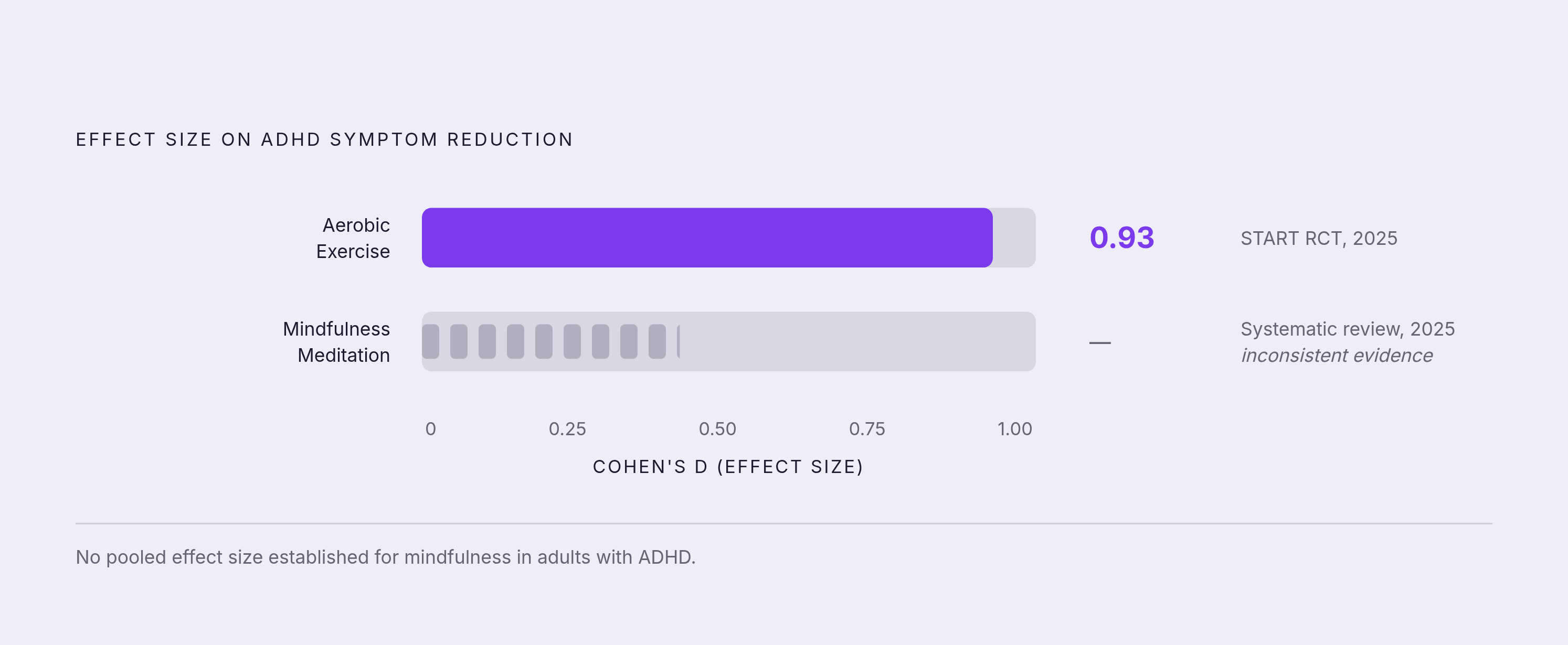
The numbers are hard to ignore, and they're the strongest in this entire piece. A 2025 randomized controlled trial called START, run on adults with ADHD, tested a structured exercise intervention layered on top of standard treatment. The result: a mean difference of -6.98 on the ASRS-v1.1 symptom scale, with an effect size of 0.93 favoring the exercise group, and no serious adverse events reported. An effect size approaching 1.0 is large by almost any clinical benchmark. This wasn't exercise instead of medication, it was exercise added to medication, and the benefit still showed up on top of it.
A separate 2025 meta-analysis by Yang and colleagues, pooling multiple studies, found very large effects of exercise on inhibitory control in adults with ADHD. That finding isn't tangential. Inhibitory control is the exact executive function tied to resisting impulsive choices and tolerating delayed rewards, the core deficit this whole piece is built around.
So what type of exercise works best? The evidence doesn't nail down an optimal duration, intensity, or format yet, and chasing that precision is probably the wrong use of energy anyway. What matters more is whether the exercise gets repeated, and repetition depends on enjoyment. A brain that discounts delayed rewards won't sustain a workout it dreads, no matter how scientifically optimized the program looks on paper. Pick something that feels good enough to return to on a bad day. The actual design constraint is a hard requirement, not a soft compromise tacked on for motivation.
One caveat worth flagging: much of this research still underrepresents adult women with ADHD, so the demographic picture behind these numbers is narrower than the condition itself.
How sleep disruption and dopamine dysregulation amplify each other, and how to interrupt the cycle
The same dopaminergic system driving motivation and reward also helps regulate circadian timing, the internal clock that governs when the body wants to sleep and wake. So when ADHD disrupts dopamine signaling, it doesn't just affect focus during the day, it can throw off the sleep-wake cycle itself. And when sleep suffers, dopamine synthesis and release take a hit the next day. That's a feedback loop, not a one-way street: poor sleep worsens ADHD symptoms, and ADHD symptoms make good sleep harder to get.
Why exactly does this happen? Circadian disruption in ADHD runs deeper than what the phrase "bad sleep hygiene" usually implies. It's a timing issue specifically, meaning when someone sleeps matters as much as how long. Someone might log seven hours a night and still struggle, because those seven hours land at the wrong point in their internal clock, not because the total was short.
A few concrete levers follow directly from that mechanism:
- A consistent sleep and wake schedule anchors circadian rhythm, giving the dopamine system a stable timing signal to synchronize against
- A wind-down routine before bed reduces the physiological arousal that makes falling asleep harder
- Cutting screen exposure before bed matters because blue light suppresses melatonin, and melatonin interacts with the same neurochemical systems already disrupted in ADHD
Worth acknowledging too: dopamine regulation and sleep both interact with female hormones across the menstrual cycle, postpartum period, and perimenopause. That's a layer of complexity outside the scope of a full treatment here, but it's real, and it means sleep interventions may need to flex around hormonal phase for some adults.
Fixing sleep is a core intervention, not an afterthought tacked onto the end of a list. It's a direct input into the same neurochemical system that exercise and diet are trying to support. Skip it, and the other habits end up fighting a system that's working against its own clock.
What to eat to give the dopamine system the raw materials it needs
Dopamine doesn't appear out of nowhere. It's synthesized from tyrosine, an amino acid the body pulls from dietary protein. No tyrosine, no dopamine precursor, no neurotransmitter. That supply chain is literal.
Foods rich in tyrosine are ordinary and accessible: eggs, fish, chicken, almonds, avocados, bananas, dairy, soy. Nothing exotic, nothing that requires a specialty grocery run.
Does the research back this up? The Berlin Aging Study II, which followed 1,724 participants, found a significant association between tyrosine intake and working memory, fluid intelligence, and episodic memory, across both younger and older adults. That study wasn't ADHD-specific, but it speaks directly to why precursor availability matters for cognitive performance broadly.
More targeted evidence comes from PET imaging work. Studies using acute tyrosine depletion protocols, including work from 2003 and a 2004 study using the same approach, measured central dopamine release using a radioactive tracer called [¹¹C]raclopride. When tyrosine intake dropped, dopamine release dropped with it, visible as increased tracer binding. That's the mechanistic link underneath the dietary recommendation: how much tyrosine is circulating in the blood tracks, fairly directly, how much dopamine gets released in the brain.
The distinction that needs to stay sharp here is the one people get wrong most often. The evidence supports getting tyrosine from whole foods as part of an overall diet. It does not validate supplemental L-tyrosine pills as an ADHD treatment, for adults or children. Popping a tyrosine supplement isn't a shortcut to the same effect as a protein-heavy diet, and treating those two things as interchangeable oversells what the research actually shows.
Practically, this plays out at breakfast. A protein-heavy plate, eggs, Greek yogurt, a spoonful of nut butter, gives the body tyrosine to work with through the morning. A high-sugar breakfast triggers a crash, and the mid-morning slump that follows reflects blood sugar swings rather than a willpower failure. It's a precursor shortage playing out in real time.
Omega-3 fatty acids (EPA and DHA) deserve a brief mention too, though the evidence here is modest. Roughly 500 to 1,000 milligrams combined, taken daily for at least three months, has shown slight symptom improvement in some studies. It's a gradual effect, not a dramatic one, and it works alongside prescribed treatment, not in place of it.
Mindfulness meditation and what the evidence actually shows for ADHD adults
Focused attention meditation has been proposed to engage reward-related brain pathways, including those involved in motivation and attention regulation. The proposed mechanisms remain an active area of research, and the evidence is not yet fully settled. Meditation engages the reward circuitry rather than sidestepping it.
But the clinical evidence is where mindfulness starts to lose ground compared to exercise, and that gap deserves to be stated rather than smoothed over. A randomized controlled trial run through Duke's ADHD program, published in the Journal of Attention Disorders, was among the first RCTs to test mindfulness specifically in adults with ADHD. An 8-week mindfulness program produced improvements in both self-reported and clinician-rated ADHD symptoms and executive functioning, compared to a waitlist control group. What stands out is the adherence. Average attendance hit 7.2 of 8 sessions, an 89.8% attendance rate, reflecting strong overall retention in the treatment group. For a condition defined partly by follow-through problems, that completion rate is worth sitting with.
But how does this hold up across the broader research? A 2025 systematic review and meta-analysis found the evidence for mindfulness in adult ADHD is inconsistent. Protocols vary widely: some studies test standalone mindfulness, others combine it with psychoeducation or skills training, and outcome measures differ enough across studies that direct comparison gets difficult. Put next to the 0.93 effect size from the START exercise trial, mindfulness simply hasn't earned the same confidence yet, and treating it as an equal alternative to exercise misreads the current evidence.
That doesn't make it useless. It makes it a supporting habit rather than a foundation. Mindfulness may work best as one piece of a broader approach, particularly when paired with cognitive behavioral therapy, where mindfulness-based CBT has been noted as potentially strengthening the effects of dopamine-increasing medication.
Here's the tension worth naming honestly: meditation is hard to start precisely because it offers almost no immediate reward, the exact same reward-timing problem this whole piece is about. The habit that would help the most is the habit the ADHD brain is worst equipped to begin. Short, structured sessions, five or ten minutes with a clear start and end, lower that barrier more than vague instructions to "sit and observe your thoughts" ever will.
Worth a quick mention too: listening to music also triggers dopamine release and can serve as a lower-barrier entry point for adults who find silent meditation unworkable. It isn't equivalent to structured mindfulness practice, but as a stepping stone into paying attention to internal states, it's accessible in a way seated meditation often isn't.
Building habits that actually stick when your brain undervalues delayed rewards
Notice the pattern running through all four habits. Exercise, sleep, diet, mindfulness: every one of them delivers benefits that are delayed, cumulative, and largely invisible day to day. That's exactly the reward profile the ADHD dopamine system handles worst. So it isn't a coincidence that these habits are hard to stick with. The same mechanism causing the ADHD symptoms in the first place shows up again at the level of behavior change.
That raises the real design question: how do you build a habit whose payoff is three weeks away, when the brain in question is wired to undervalue anything past about three minutes?
What has to change is structure. The task is engineering shorter feedback loops into activities whose real payoffs sit objectively far away. A few strategies follow directly from that:
- Pair a new habit with something that already delivers dopamine on its own, such as music during a workout, a genuinely enjoyable breakfast, or a friend who joins for the run A done-list or a streak counter creates a small reward at the moment of doing the thing, not just whenever the outcome eventually shows up
- Start with exercise, since it has the strongest evidence, and start smaller than feels sufficient. A ten-minute walk finished beats an hour-long program abandoned after two weeks
- Anchor new habits to routines that already exist: exercise at a fixed time tied to something already happening, a protein breakfast that replaces the old breakfast rather than sitting alongside it as one more thing to remember
None of this works identically for everyone. Subtype, comorbid conditions, medication status, and the general shape of someone's daily life all change which habit sequence actually holds. The mechanism-awareness is the transferable part, not a rigid order of operations, and mistaking one for the other is probably the fastest way to abandon all four habits at once.
Tools that track patterns and surface reminders at the right moment can close part of that feedback gap, since a lot of the burden in habit maintenance comes from tracking and remembering rather than the habit itself. It's remembering to start it in the first place. Removing that remembering step frees up decision-making energy for the habit, rather than for the logistics around it.
Understanding why a habit works changes the relationship someone has with it. A habit picked because it's supposedly good for you gets dropped after one bad week. A habit understood as a lever on a specific, identifiable mechanism, DAT function, BDNF, tyrosine availability, circadian timing, is easier to pick back up after the inevitable lapse, because the mechanism it targets is still sitting there, waiting, regardless of how the week went.