Deductive Reasoning Examples in Structured Problem Solving
Deductive reasoning collapses when premises fail, not when the logic looks clean.
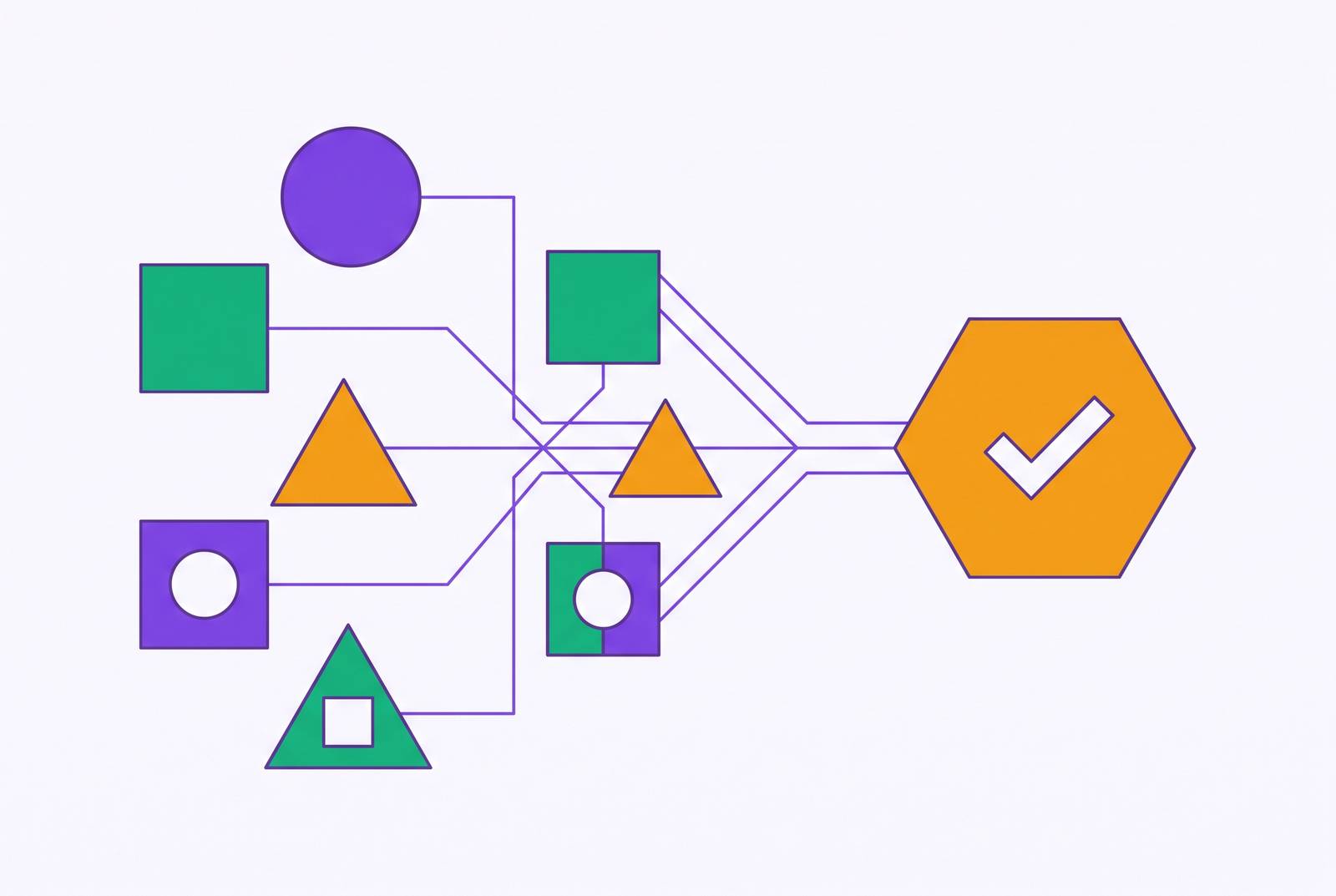
Deductive reasoning starts with something you already know is true, applies it to a specific case, and hands you a conclusion that has to follow. No probability, no best guess. That's the entire appeal: in a world running on estimates and hunches, deduction is one of the only tools that produces actual certainty, provided the starting material holds up. Most people treat the logical structure as the hard part. Most people treat the logical structure as the hard part, but it isn't. The premises are.
The basic move is a three-step sequence. Gather premises that fit a particular logical shape. Check the first premise against the second. Connect the two to land on a conclusion. That's the skeleton. But the sequence only works if the argument is sound: the structure has to be valid and the premises actually have to be true. Get the structure right but start with a false premise, and the whole chain snaps at the first joint. People skip past this in school, yet it matters most once you're applying this to a real diagnosis, a real contract, a real budget.
The three canonical forms practitioners use
Three shapes cover most of what shows up in practice.
The syllogism is the one everyone half-remembers: all humans are mortal, Socrates is human, therefore Socrates is mortal. Both premises are general truths, and the conclusion drops out specific and certain, no wiggle room.
Modus ponens is the workhorse: "If P, then Q. P. Therefore, Q." It sounds almost too simple to name, but it's the form running through legal rulings, clinical decisions, and business calls, every single day.
Modus tollens flips it: "If P, then Q. Not Q. Therefore, not P." Structurally valid, but it has fraudulent cousins that look nearly identical and aren't. Most of the trouble in the next section comes from that gap.
None of this is academic categorizing for its own sake. Practitioners run these moves constantly without ever naming them, the same way a fluent speaker uses grammar without reciting rules.
How deductive reasoning operates in mathematics and science
Math is where deduction appears in its cleanest form. Squares have four sides. A shape gets identified as a square. That shape has four sides, full stop. No judgment call, nothing to estimate. The premises are axioms or definitions, and the conclusion is a theorem. Zero friction, because the premises were defined into truth from the start.
Science borrows the same structure and adds friction on purpose. A liquid boils at a defined temperature under given atmospheric conditions. A pot of water gets heated to that threshold at sea level. The water boils. Scientists lean on this exact structure to build hypotheses and test them against what actually happens. But look at the hedge sitting inside the premise: "standard atmospheric pressure." Climb to altitude and that condition breaks, and the conclusion breaks with it. Real-world testing exists precisely because premises that look airtight on paper can turn out to be conditional the whole time.
Deduction delivers certainty when the premises are genuinely solid, not when the logic merely looks clean. Law, medicine, and business inherit the same machinery. What changes across them is how hard it gets to actually confirm the premises are true, and that difficulty is where most real-world reasoning fails.
Deductive structure in law and medicine, where premise quality determines outcomes
Legal reasoning runs almost entirely on syllogism. A law states anyone under 18 cannot sign a binding contract. A 16-year-old signs one anyway. The contract is invalid. The legal rule is the major premise, the case facts are the minor premise, and the ruling falls out mechanically once both are settled.
Courtroom arguments are rarely about the logical form itself. Nobody's fighting over whether modus ponens is valid; they're fighting over whether the rule actually applies to this case, or whether the facts are what they've been presented as. Premise quality, not logical structure, is where the real battle happens, and any lawyer who tells you otherwise is arguing a case they've already lost on the facts.
Medicine runs the same play, and here the stakes get sharper. Bacterial infections respond to antibiotics. Lab results confirm a bacterial infection. Prescribing antibiotics should treat the illness. Clean, deductive, and it keeps treatment tethered to established knowledge instead of guesswork. But the vulnerability sits in the minor premise: if the diagnosis is wrong, the entire treatment conclusion collapses even though the logic never faltered. Confirming a diagnosis is the genuinely hard clinical work. Everything downstream of it is close to mechanical.
Putting law and medicine side by side makes a pattern become visible. Deductive structure doesn't remove the need for human judgment, it relocates it. All the hard thinking gets pushed onto the premises, which is actually a feature: it makes that judgment visible and auditable in a way gut instinct never is.
Deductive reasoning in business analysis and strategy consulting
Business examples tend to be blunter, and that bluntness is the point. Higher production costs without price adjustments lead to lower profit margins. A company raises costs but holds prices steady. Profit margins drop. Almost too obvious to write down, but the value is in forcing the decision onto paper before gut instinct quietly overrides it in a meeting.
A second example gets subtler, and this is where people get sloppy. The company's most significant sales come from middle-income earners in its home state. The company should allocate marketing funds toward its most significant customer group. Therefore, allocate more toward middle-income earners in the home state. That second premise isn't a fact, it's a policy choice dressed up as a rule, and business reasoning mixes those two constantly. A policy premise deserves harder scrutiny than a factual one, not the same nod of approval.
Strategy consulting formalizes this at the project level. Consultants open with a broad framework, such as Porter's Five Forces, then test specific data points against it. Issue trees do the heavy lifting: break a big question like profitability into its drivers, revenue and cost, then keep decomposing each branch further down. MECE structuring, mutually exclusive, collectively exhaustive, makes sure those categories don't overlap and don't leave gaps. That's deductive hygiene applied to the categories themselves as well as to the conclusions drawn from them.
Why does this matter organizationally? Analytical thinking is the top skill employers say they want, with roughly 7 in 10 companies calling it essential, and 63% pointing to skills gaps as a major barrier to business transformation. That's companies admitting their people can't reliably move from premise to conclusion under pressure, and it's costing them real money. That's companies admitting their people can't reliably move from premise to conclusion under pressure, and it's costing them real money.
The fallacies that break deductive chains
Formal fallacies are structural. An argument can have entirely true premises and still be invalid, because the shape connecting them is broken, and this is the distinction most people never learn to see.
Affirming the consequent is the sneaky one. It claims that because Q is true, P must be true too, reversing the actual direction of inference. It appears constantly in diagnostic thinking: this symptom occurs with disease X, the patient has this symptom, therefore the patient has disease X. Invalid, because plenty of other conditions might produce the same symptom. Ruling those out is the actual work. Skipping that step is where the fallacy quietly lives.
Denying the antecedent is its cousin. If you are a ski instructor, you have a job. You are not a ski instructor. Therefore, you have no job. Obviously broken once it's spelled out like that, but people fall for versions of it constantly, because the conclusion sometimes turns out true by accident. An accidentally correct conclusion feels like proof the reasoning worked. Really it's coincidence wearing logic's clothes, and that's the actual danger: it teaches you the wrong lesson and you don't notice for years.
A few more travel under specific names. Undistributed middle, where a shared middle term never actually connects the two premises the way it looks like it does. Affirming a disjunct, assuming that because one option in an "either/or" is true, the other must be false, even when both could hold at once. Denying a conjunct, wrongly concluding that if one part of an "and" statement is false, the whole thing collapses in a direction it doesn't logically have to. None of these are exotic. They occur in ordinary meetings, ordinary diagnoses, ordinary memos, dressed up as common sense.
What brain research reveals about how deductive reasoning is physically supported
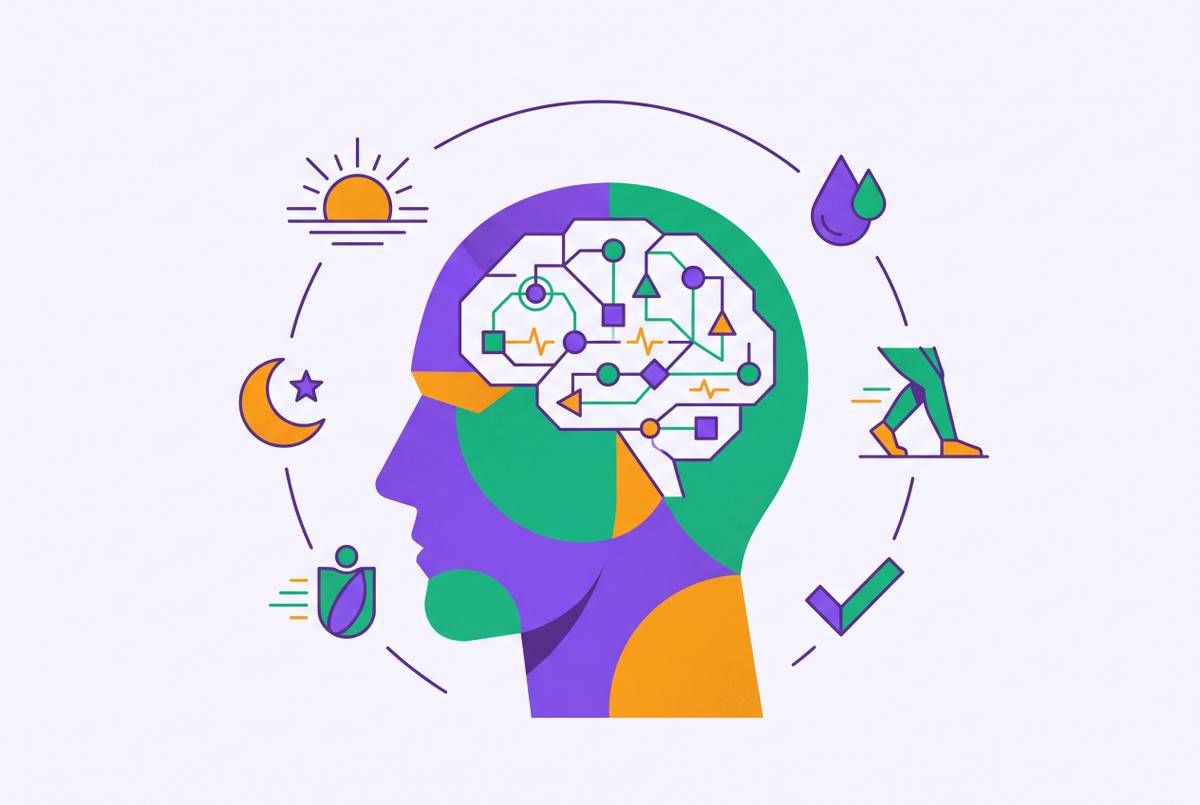
Deductive reasoning isn't just "being logical" in some generic sense. It looks like a specific, locatable brain function, and a 2025 study published in the journal Brain, run out of UCL and the National Hospital for Neurology and Neurosurgery in London, mapped it directly. Researchers recruited 247 patients and tested them using two new instruments, the Analogical Reasoning Test and the Deductive Reasoning Test.
The finding cuts against old assumptions. Patients with damage to the right frontal lobe made about 15% more errors than patients with damage elsewhere, and more than healthy controls. That challenges the standard story that reasoning lives mostly on the left side of the brain or gets spread diffusely across the whole cortex. Instead, it points to a specialized right frontal network handling active, flexible, novel problem-solving, exactly the kind deduction demands when a problem isn't a template you've already solved a hundred times. Both left and right frontal regions still seem to get involved when generating conclusions on problems that have one determinate answer.
Other research has pointed toward deductive and probabilistic reasoning relying on neurologically distinct processes rather than being two flavors of the same mental habit.
The prefrontal cortex sits at the center of it, pulling different kinds of knowledge together so reasoning stays coherent under complicated conditions. So what does this mean for anyone reasoning under deadline pressure? Deduction is a specific cognitive mode that gets fatigued, trained, or disrupted like any other. External scaffolding, issue trees, MECE structuring, takes load off a brain system that has real, physical limits, not infinite bandwidth.
Where AI-assisted deductive reasoning succeeds and fails
Deduction is exactly the kind of task natural-language AI systems could change: parsing tax law, calculating insurance premiums off policy rules, pulling shipping costs from logistics tables, compiling schedules from structured data. All premise-to-conclusion problems, just run at scale.
Classical rule-based AI, the old symbolic kind, guarantees error-free deduction provided it's programmed correctly. Large language models carry no such guarantee, and that gap is the whole story here. Error-free behavior isn't something you can count on with an LLM, even a strong one, and treating LLM output as if it came with symbolic-logic guarantees is the mistake to watch for.
The failure patterns are specific. Larger models tend to produce more valid, atomic reasoning steps, which sounds like progress on paper. In practice those steps often carry low utility, building chains that drift off course and that the model can't recover from once they do. LLMs have been shown to fall for logical fallacies in ways that parallel common human reasoning errors. GPT-4, specifically, struggles with De Morgan's Laws, the rules governing how negation interacts with "and" and "or." That's a precise structural gap, one you could point to on a whiteboard.
Research has shown that model performance on multi-step deductive tasks varies considerably with problem complexity, and certain reasoning structures present persistent difficulties. In one set of preliminary experiments, parsing logical questions into symbolic form succeeded only 17% of the time for a given model, which says something blunt about how brittle that translation step from natural language into symbolic logic really is.
One direction sidesteps the difficulty of translating natural language into logical form entirely instead of trying to fix it. Systems like LOGIPT, from researchers at Peking University and Microsoft Azure AI, fine-tune models to directly imitate the reasoning process of a logical solver, skipping the fragile natural-language-to-symbolic step. That approach has outperformed solver-augmented methods on deductive reasoning benchmarks. The fix isn't a smarter parser. It removes the parsing bottleneck as a step.
How deductive reasoning is tested in hiring
Deductive reasoning tests are standard fare in consulting, finance, and tech hiring, and for good reason: they measure logical thinking under a time crunch, which is a fair proxy for how someone actually performs on the job when the clock is running.
Common formats include syllogisms, ordering and arrangement puzzles, and grouping problems, all variations on the same premise-to-conclusion sequence running through this entire piece. SHL's Verify Ability Tests are one major commercial format, usually running 22 to 25 minutes depending on seniority, mixing verbal questions with image-based and text-extraction formats, sometimes following up with a second verification test to confirm the first result wasn't a fluke. Kenexa, from IBM, runs a similar style, typically 20 questions, with time limits shifting by role level.
One piece of test-prep advice keeps resurfacing, and it happens to mirror the whole method described in this piece: find the one variable in a question that's certain and unwavering, then test every other clause against it. Anchor the major premise, then interrogate the minor one. Same move, whether you're sitting a timed assessment or working a differential diagnosis.
Building deductive reasoning as a working habit rather than an occasional technique
When does a task actually call for deduction? Whenever it involves matching rules to situations, deciding from given premises, or reaching conclusions through a systematic chain of steps, whether that's a two-line syllogism or a ten-step chain of logic. That's the test, and it scales from a grade-school word problem up to a courtroom ruling without changing shape.
Complexity climbs along four separate axes: how intricate the logical constructs are, how deep the reasoning chain runs, how many premises are stacked, and how abstract the concepts get. Knowing which axis is actually driving the difficulty in front of you is a useful diagnostic on its own, because it tells you where to spend the effort instead of guessing.
A few habits make the whole sequence visible instead of letting it run silently in someone's head, and skipping them is the most common mistake in how people actually try to reason under pressure.
- State premises explicitly before landing on a conclusion. Forces an audit before commitment, instead of after.
- Use issue trees or MECE structuring so the logical hierarchy is visible to anyone else looking at the work, including people other than the person who built it.
- Run the reasoning chain against the formal fallacy list before signing off on a recommendation.
- Treat AI tools as premise-checkers and step-generators; establishing the premises themselves stays a separate job. Establishing and validating premises stays a human job.
One might argue all of this sounds like overhead, extra steps wedged between a smart person and their answer. That overhead turns a hunch into something auditable, something another person can check, challenge, and trust before money or a diagnosis rides on it. Deduction is the right tool when the premises are genuinely solid and certainty is actually available. When they're not, when the work runs on patterns and partial data instead, that's inductive territory, and it calls for a different kind of reasoning built for a different kind of problem.