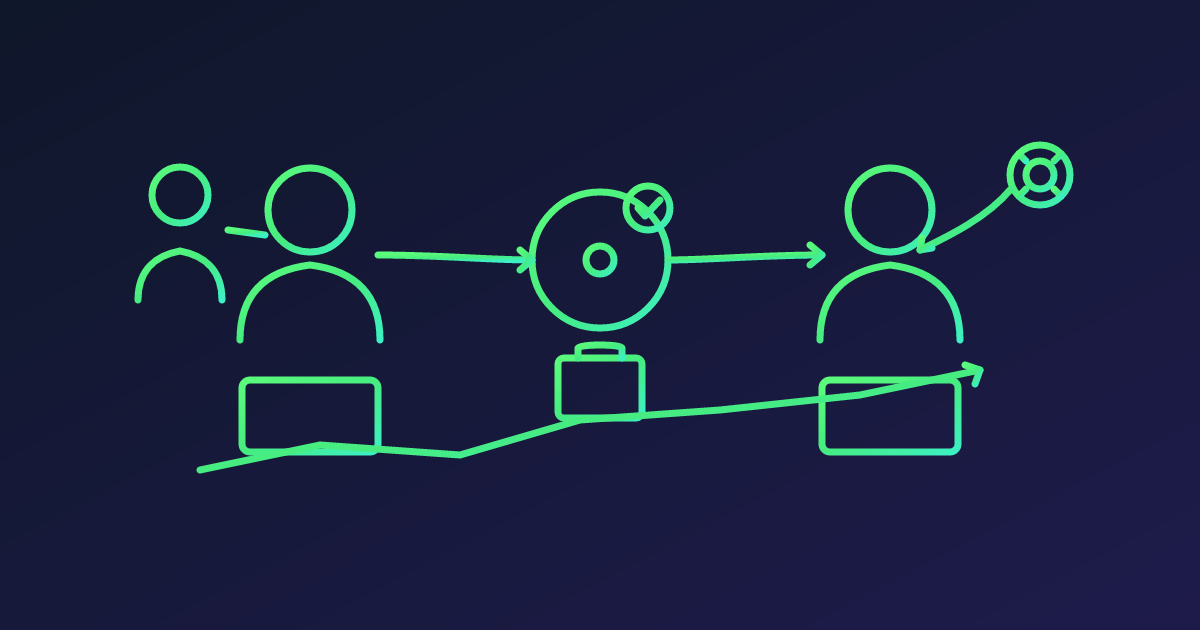
Personalization Through AI Memory Layers
I remember the exact moment I realized an AI system had no memory of me at all. I'd spent twenty minutes explaining my project, my constraints, my preferences. The response was…

I remember the exact moment I realized an AI system had no memory of me at all. I'd spent twenty minutes explaining my project, my constraints, my preferences. The response was good. I closed the tab. The next day I came back, typed a follow-up, and the system greeted me like a stranger.
Most people assume this is a bug. It is not.
It turns out this is not a bug. AI systems are built to forget. Each session starts completely fresh. No history. No memory of last week. The model knows a great deal about the world. It knows nothing about you.
Think of the model's attention like a whiteboard. It holds everything relevant to your current conversation. When the session ends, someone erases it.
Here is the distinction that actually matters. Some knowledge is baked into the AI during training; it cannot change. Other knowledge is stored separately and fetched when needed. Real personalization only comes from that second kind. You cannot bake one person's preferences into the model itself. You have to store them somewhere else and pull them up when needed. That is not a minor technical detail. It changes everything about how you build a system that is supposed to know you over time.
The problem compounds in multi-agent systems, where several AI components coordinate. A lot of those failures come down to one simple problem: each AI component is working from a different version of reality. At scale, forgetting stops being a minor annoyance. It becomes a real failure. One nobody notices until something breaks badly, and expensively.
What an AI Memory Layer Actually Is
A memory layer is what lets an AI actually learn about you over time, not just within a single conversation, but across all of them.
Here is the analogy I keep coming back to. Your current conversation is like your desk. Everything on it is immediately accessible, but when you leave for the night, someone clears it. The memory layer is the filing cabinet behind you. Information persists, gets organized, and can be pulled back out when relevant. The desk is session-scoped; the cabinet is persistent.
Simple enough. But most product descriptions skip a crucial point. Three things have to work together for memory to produce real personalization. Storage: you have to capture information somewhere. Retrieval: you have to surface the right information at the right moment, not everything at once. And acting on it: using what is retrieved to actually shape the response. That last step is the one most often absent from the marketing copy. Logging without retrieval is an audit trail. Retrieval without action is a glorified search engine. All three together are what make a conversation feel like it has continuity.
The efficiency argument matters here too, and it is not incidental. The lazy approach, dumping your entire conversation history into every request, gets expensive and slow very quickly. Memory layers fix this by fetching only what is actually relevant, rather than loading everything at once. At scale, that difference is the line between a viable product and an economically unsustainable one. I have watched teams discover this the hard way. Around month three, the bills arrive and everyone starts asking questions nobody thought to ask during the initial build.
A framework called CoALA, developed at Princeton, is worth knowing about here. It maps AI memory onto the same categories cognitive scientists use for human memory. That is not just a pretty metaphor, it clarifies what each part of a memory system actually needs to do.
Four Types of Memory, Four Jobs to Do
Working memory is the active workspace. It is what the AI is processing right now, in this conversation. It is fast. It is also temporary. When the session ends, it is gone. This is where most AI interactions currently live.
Episodic memory stores specific past experiences: what happened, when, and with whom. Think of each conversation turn as a logged episode, stamped with a time and a session ID. This is the memory type that supports factual accuracy and auditability. If a user asks "did I tell you I was vegetarian?" the system should be able to answer that with precision rather than inference. That distinction matters more than it initially sounds, especially in anything adjacent to compliance or customer service.
Semantic memory is the "what is" layer: general facts, concepts, relationships. It can be sourced from external databases, documentation, or prior conversations distilled into standing facts. The main way to pull from it in real time is a technique called Retrieval-Augmented Generation. When a system learns that you prefer concise answers and treats that as a standing fact rather than something it re-derives each session, semantic memory is doing its job.
Procedural memory encodes learned behaviors: formatting preferences, communication style, interaction norms. Not just what the agent knows about you, but how it behaves with you. In practice, this often lives in system instructions and conversation summaries. It is also, in my experience, the memory type users are most likely to notice when it is working well, and most likely to find quietly unnerving when it works very well indeed.
There is also a fifth type that does not fit neatly into the standard taxonomy but is becoming increasingly consequential in enterprise contexts: organizational context memory. Org structure, team norms, project history, institutional knowledge specific to a company rather than an individual user. As AI agents run against live enterprise data, this gap is difficult to paper over, and the frameworks have not fully caught up. Most vendors will not tell you that directly.
These types are not interchangeable, and conflating them produces architectures that do none of the jobs particularly well. "What this user prefers" requires semantic memory. "What this user said last Tuesday" requires episodic memory. "How to format responses for this user" requires procedural memory. Different retrieval strategies, different storage substrates, different update cadences. A December 2025 survey called "Memory in the Age of AI Agents" flags several open questions: how do short-term memories become long-term ones, how do memories eventually get folded into the model itself, and how do you govern memory across multiple AI agents working together. This taxonomy is a starting point, not a finished answer.
How Memory Is Stored and Retrieved: The Technical Substrate
The storage technology underneath these memory types is where things get complicated, and where a lot of product claims fall apart.
Vector databases store information as mathematical coordinates. Things that are conceptually similar end up close together in that space. That means the system can find things related to your question even when the exact words do not match. These searches happen in milliseconds, even across enormous datasets.
Knowledge graphs work differently. They map out explicit relationships between things. You can follow those connections step by step and see exactly how the system arrived at an answer.
The limitation of vector-only approaches surfaces in domains where facts change. A six-month-old pricing fact and a current pricing fact look equally similar to a query if their text is semantically close. The system confidently returns outdated information with no signal that anything is wrong. I have seen this play out in production environments where engineers genuinely believed the retrieval was current, because the similarity scores looked fine. The damage surfaces downstream, in customer conversations or compliance reviews, not in the retrieval logs. For compliance, policy, or customer status contexts, that is a silent failure mode that organizations often do not discover until the situation is already complicated.
Temporal knowledge graphs solve this by building time directly into the structure. Each fact is dated. Old facts get marked as outdated rather than deleted. The system always knows what was true then versus what is true now. Graphiti, an open-source framework, implements this for AI agents, enabling an evolving memory network that standard RAG systems, which treat memories as isolated documents, cannot support.
The approach that is working best in real deployments combines both tools. A vector database handles the broad first sweep. A knowledge graph then adds precise relational context. Mem0 does this well; it converts conversations into small, discrete memory facts and organizes them by user, session, or agent. Key-value stores handle the simple stuff: quick lookups of explicit attributes like your name, your preferences, your settings.
No single approach does everything well. The architectures that hold up in production tend to use multiple specialized tools working in concert, which is both more complex to build and more honest about what the problem actually requires.
From Architecture to Personalization: How Memory Builds a User Model Over Time
Real personalization feels different from having a system drop your first name into a greeting. It means the AI actually remembers context from past conversations, organizes it, and uses it to respond better over time. What most product documentation does not adequately explain is how these layers compound on each other, and why that compounding is both the point and the complication.
In early sessions, the AI knows a lot about the world but almost nothing about you. It can process what you type right now. That is about it. It is capable, but generic. Like a well-stocked library, helpful, but not tailored to you.
Over time, the system builds a raw record: what you said, what you asked for, what you corrected. Patterns emerge from that record. "This user prefers concise responses" starts as a single observation. After enough repetition, it becomes a standing fact the system no longer has to re-figure out each time. Procedural memory handles the behavioral layer: learned workflows, interaction norms, the accumulated adjustment of how the agent moves in relation to you specifically.
Several systems have been built explicitly around this user-profile-building approach. Memobase centers on persistent user profiles for generative AI applications. Tencent's HiMeS system is inspired by how human brains consolidate short-term memories into long-term ones, either a genuinely insightful design choice or a flattering analogy, depending on how closely you read the research. AdaMem focuses on selectivity, learning what to remember rather than storing everything indiscriminately. That turns out to be a harder and more interesting design problem than it initially sounds, because the system has to make consequential judgments about significance with limited information.
At the research frontier, a project called SECOND ME proposes something more ambitious. Instead of just storing facts about you, the memory system becomes an actual model of who you are. That is a meaningful conceptual shift. The memory layer stops being infrastructure and starts being a representation of who you are. Some people will find that framing exciting. Others will find it alarming. Both reactions are reasonable, and how you land probably depends on whether you trust the entity holding that representation.
Where the Major Platforms Have Landed in 2025
What was theoretical a year ago is now in the products most of us use every day. The convergence across major platforms happened fast, and it is worth pausing on what that actually means.
OpenAI introduced memory for ChatGPT Pro users in 2024. An April 2025 update substantially expanded the functionality to reference all past conversations, and by June 2025 it was available to all users. Sam Altman described his excitement about AI systems that "get to know you over your life," framing persistent memory as the mechanism for systems that are "extremely useful and personalized." The goal, stated plainly: longitudinal relationship, not just session utility.
Anthropic embedded persistent memory in Claude 3.5 and subsequent models, storing user-specific summaries and preferences recalled across conversations without requiring explicit user prompts to trigger recall. Anthropic's language around this consistently emphasizes steerability, the idea that users control what is remembered. That emphasis reflects a distinctly different design philosophy than "remember everything and surface what is relevant," and the gap between those two philosophies matters more than either company's marketing suggests.
Google's approach with Gemini draws on an unusually broad data footprint: Gmail, photos, search history, YouTube history, all potentially feeding into a Personal Intelligence layer. Memory launched in February 2025, with personalization as a system feature added the following month. xAI introduced long-term memory to Grok in April 2025.
On the developer side, several dedicated memory tools have gained traction. Mem0, backed by Y Combinator with a $24 million funding round as of October 2025, uses the dual-store approach described earlier. Letta, formerly MemGPT, makes memory an explicit, editable part of an AI agent's state, something you can actually inspect and change. Zep focuses on conversation history and time-aware memory with knowledge graph support.
The market context explains some of the velocity. The AI agent market is projected to grow from roughly $3.7 billion in 2023 to over $100 billion by 2032. Gartner predicts that 40% of enterprise software will include task-specific AI agents by 2026. Memory is becoming a baseline expectation, not a differentiator. And new evaluation benchmarks, LoCoMo, LongMemEval, BEAM, PERMA, are starting to hold these systems to measurable standards rather than letting marketing claims go unchecked. That shift toward accountability is worth watching carefully, because right now the benchmarks and the product claims are not always describing the same thing.
What Persistent Memory Gets Wrong Without Proper Governance
People regularly report that ChatGPT seems to know more about them than they remember sharing. Many find that unsettling. I think that reaction deserves to be taken seriously. The system is doing exactly what it was designed to do, which is part of why it is worth examining carefully.
AI agents generate logs and records as they work, most of it invisible to you. That hidden record can be useful for accountability. It can also become a surveillance risk if it gets fed back into training data without your knowledge. The same infrastructure that makes personalization possible makes comprehensive behavioral logging possible. These are not separate architectural choices; they are the same capability pointed in different directions, and most users have no reliable way to tell which direction applies to them.
The stakes of a data breach also change with persistent memory. A traditional breach exposes things like names, email addresses, and transaction records. A breach of a mature memory system exposes something far more intimate. Emotions shared across hundreds of conversations. Vulnerabilities disclosed in unguarded moments. Decision patterns built up over months. The harm model needs to account for that distinction. Most organizations have not yet fully reckoned with it, partly because the legal frameworks have not caught up, and partly because reckoning with it honestly would complicate some product roadmaps.
Memory manipulation is an underappreciated attack surface. Memory can be shaped, nudged, or edited. Some argue this concern is overstated, that users retain ultimate agency over their behavior regardless of what a system knows. That argument is not obviously wrong. But the more precisely a system understands how you make decisions, the more precisely it can influence those decisions, and the argument for personalization and the argument for concern are drawing from the same architectural well. You cannot fully separate them.
The switching cost question is evolving in ways that have received insufficient attention. With most software, switching costs are practical: setup time, missing features, migration hassle. With AI memory systems, the cost is something more personal. You lose a system that has learned how you think, how you communicate, how you work. Researchers are now identifying emotional and cognitive attachment as a new kind of lock-in. Memory becomes a competitive moat. That can be a legitimate design outcome or a deeply problematic one, depending almost entirely on how it is governed, and the honest answer is that governance is still catching up to the architecture.
The regulatory environment is beginning to close that gap. GDPR principles of purpose limitation, right to erasure, and data accuracy apply directly to memory systems. The FTC ties notice and consent requirements to specific data collection events. State attorneys general have begun addressing memory-specific concerns. The gap between regulatory expectation and technical implementation is real, and it is narrowing faster than some platforms appear to have anticipated.
The drive toward persistent memory is simultaneously a plausible pursuit of user benefit and a plausible pursuit of competitive advantage and data monetization. These motivations are not mutually exclusive. But they produce meaningfully different architectural choices when they diverge, and opaque memory systems make both ethical enforcement and regulatory compliance harder, regardless of which motivation is actually driving the roadmap.
User Control as the Design Principle That Holds It Together
Memory that is editable and resettable is not a nice-to-have. It is the design feature that determines whether a memory system serves the user or quietly operates against them, and from the outside, the difference is nearly invisible.
Anthropic's consistent emphasis on steerability reflects a real architectural commitment, but it also clarifies a distinction that is easy to miss. Transparency tells you what is happening. Agency lets you change it. A system can be fully transparent about storing something you cannot delete. That is not user control; it is notification dressed up as empowerment, and conflating the two does users a genuine disservice, however inadvertently.
Storage location is a concrete variable that users should understand and, currently, most do not. On-device storage, as implemented by tools like Limitless, keeps data local; nothing leaves the device. Cloud storage, as implemented by ChatGPT, requires trusting the platform's governance, retention policies, and breach response. Neither is inherently superior, but users deserve to know which model they are operating under before they start accumulating a longitudinal record of their thinking inside a system. Most do not find out until they go looking for the answer. Some never go looking.
Letta's editable memory blocks make memory state inspectable and modifiable at the developer level. The memory is a legible component you can reason about, correct, and understand in terms of how it influences outputs, rather than a black box operating beneath the interface. That is a qualitatively different relationship to the system than most deployed products currently offer, and I think it represents where the field needs to go, even if it is not where most of it currently is.
The right to be forgotten is not just an ethical preference. It is a legal requirement with real technical consequences. Memory systems have to be built for deletion, not just storage. Temporal knowledge graphs handle this better than standard vector databases, where deletions can be incomplete or produce unpredictable results. The governance requirement shapes the architecture, or it should.
AdaMem's approach, learning what to remember rather than storing everything, is both an efficiency strategy and a privacy-aligned architecture. Selective retention as a design value produces systems that are easier to audit, easier to govern, and less prone to the accumulation users describe when they feel surveilled rather than served.
The PERMA and LongMemEval benchmarks measure something important. It is not enough for a system to accurately remember what you said. It also has to apply that knowledge in ways that actually match what you want. A system that remembers everything but uses it badly is not personalization; it is just a very thorough filing cabinet. The evaluation frameworks converging on this field are pushing toward a standard where good memory means being appropriately responsive to user intent, not merely precise in storage.
Memory layers that preserve user agency, where the human retains meaningful control over what the system knows and how it applies that knowledge, produce personalization that is genuinely useful. Memory layers that optimize for retention and engagement without commensurate user control produce something else: systems that know you very well, that you cannot meaningfully govern, and that you cannot easily leave. When you encounter a memory-enabled AI system, the most useful question you can ask is not what it remembers. It is where, precisely, your control begins and ends. That answer is harder to find than it should be.