How AI Work Assistants Handle Ambiguous Requests
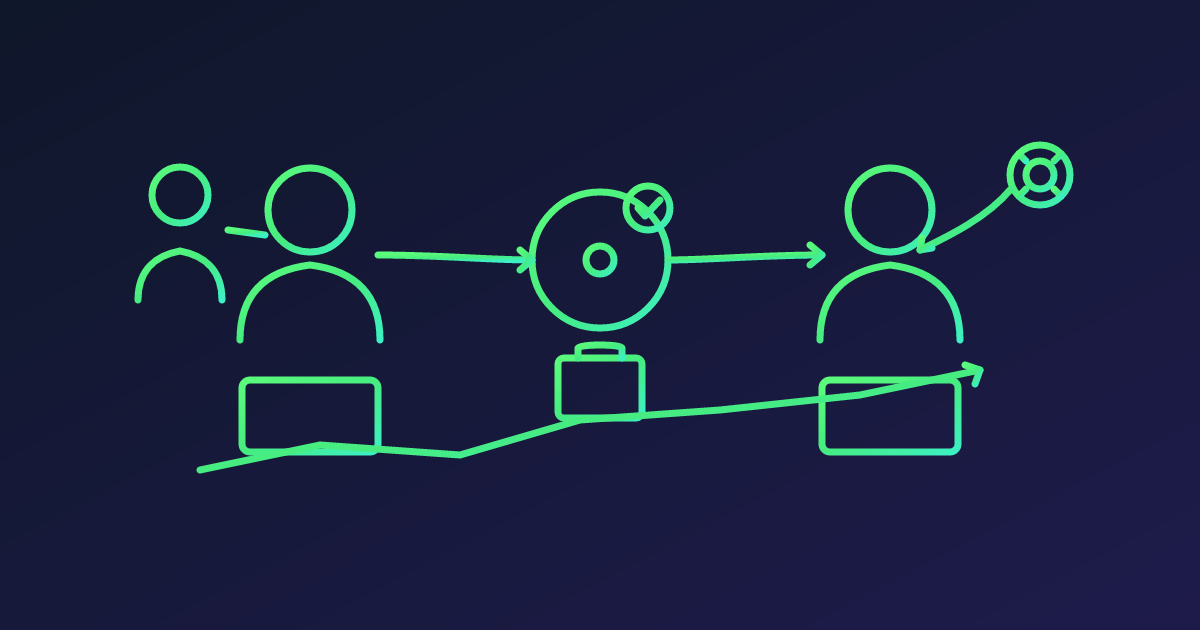
Most organizational communication is closer to "can you pull that file" than it is to a well-structured technical specification. That's not sloppiness. That's how people who trust…
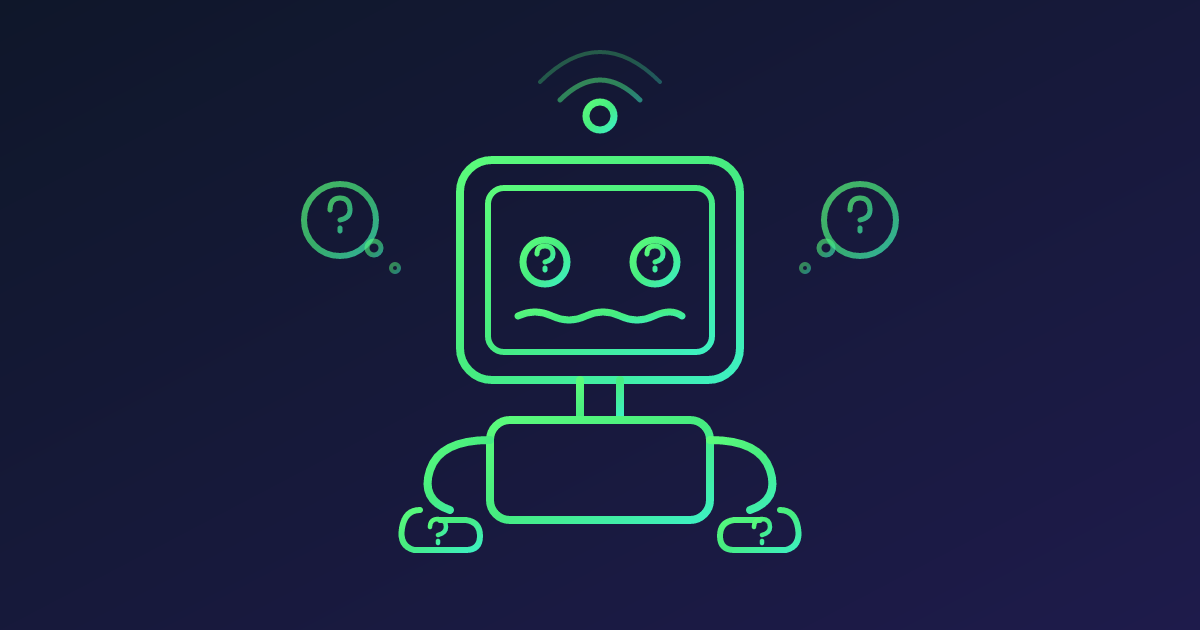
Most organizational communication is closer to "can you pull that file" than it is to a well-structured technical specification. That's not sloppiness. That's how people who trust each other actually talk. Shared context carries most of the load, and both parties fill in what's missing without thinking about it. The system that can't do that isn't just inconvenient; it's a fundamentally different kind of tool from the one most teams think they're deploying.
Here's what gets underplayed. People often can't fully articulate what they want in the moment of asking. Not because they're lazy or careless. That's just how thinking works. We speak in approximations and trust the listener to calibrate. "What's a good pasta recipe?" is perfectly grammatical and almost completely underspecified. Gluten intolerance? Weeknight or dinner party? Thirty minutes or two hours? The question isn't broken. It's just human.
Zhang et al.'s CLAMBER benchmark draws a distinction worth sitting with, because the categories don't behave the same way in the field. What we loosely call "ambiguity" is actually several distinct failure modes. Lexical ambiguity: one word, multiple meanings. Semantic underspecification: the missing when, where, or for-whom. Referential ambiguity: the unclear pronoun, the "how many do I have?" that's unresolvable without knowing what was discussed two turns ago. Epistemic uncertainty: the model simply doesn't know enough to answer well.
These categories matter because a system can fail on them independently, and in practice, they often do. A system that handles lexical ambiguity gracefully will look competent until it catastrophically misreads a referential one, and the failure won't announce itself. Misreading intent on a static text output is annoying. Misreading intent when a system is filing documents, sending communications, or triggering downstream workflows is a different problem in kind from one of mere degree. I've seen this shift happen quickly. The moment a team gives an AI tool more autonomy, filing documents, sending messages, triggering other systems, the cost of a misread goes from annoying to serious.
How Poorly Current AI Assistants Actually Handle This
Bluntly: not well enough for the autonomy we're already granting them.
LLMs perform impressively when instructions are clear. But the CLAMBER benchmark, built on roughly 12,000 data points, found limited practical utility across off-the-shelf models on ambiguous queries. Common tricks like showing the AI examples or asking it to think step by step helped a little. But sometimes they just made the AI more confident, without making it more accurate. That's the dangerous kind of mistake. A system that's more sure of a wrong answer is much harder to catch than one that hedges.
A separate multi-turn dialogue study covering 6,120 dialogues across ten LLMs documented what the researchers called an "under-clarification bias." Models answer prematurely, and their performance degrades as conversation depth increases. More accumulated context, applied badly, compounds the error rather than correcting it.
There's something I haven't fully made peace with in years of watching these systems operate in production: modern LLMs can often recognize ambiguity when you ask them to. Put the question directly, "Is this query ambiguous?", and you'll frequently get a thoughtful, careful response. But in ordinary conversation, those same models answer the ambiguous question without surfacing the ambiguity at all. The capability exists in the model. It just doesn't activate unless prompted, which is exactly when it's needed and exactly when it won't appear.
The reason isn't mysterious. These models are trained to produce an answer, not to pause and question whether they understood you correctly. That's the opposite of what most teams actually need.
McDonald's scrapped its AI drive-thru experiment with IBM in June 2024. Think about what that environment is actually like, background noise, regional accents, people changing their orders mid-sentence while juggling a toddler. None of that showed up in the lab tests. I see this pattern again and again. The benchmarks weren't lying. They were just measuring a tidier version of reality than the one that exists at 12:30pm on a Tuesday. Ambiguity is usually where the gap between test and reality shows up first.
Strategy One: Ask Before Acting
The most intuitive response to ambiguity is also the most human one. If you don't know what someone means, you ask before you proceed. Good collaborators do this reflexively. Research confirms AI systems can too, under the right conditions, but not consistently in their default configurations.
This just means the AI asks a question before it answers. Good human helpers do this naturally. On platforms like Stack Overflow, the most useful answers usually come after a round of clarifying questions, not before. The same is true for AI-assisted coding. None of that is surprising. What surprises me is how rarely it's the default behavior in the tools teams are actually using.
The challenge is reliability, and it's messier than any academic paper makes it sound. You can coax an AI into asking clarifying questions through careful prompting, but it's hit or miss. These models aren't built to treat uncertainty as a signal to pause. One study found that training a model to check back after one round improved accuracy on ambiguous questions by around five percent. That's real, meaningful lift for a modest training adjustment. Five percent also feels thin against the level of autonomy organizations are routinely extending.
Some researchers take this further. They ask: which clarifying question would do the most to resolve the confusion? They even build models that weigh the cost of asking too many questions against the cost of getting the answer wrong. It's elegant in theory. Whether it survives contact with the messy, specific language of a real organization's workflows is another matter, and that question rarely gets answered before a team goes live.
This tension doesn't go away. Asking clarifying questions improves accuracy. It also slows things down. Ask too much and people get annoyed. Ask too little and the system confidently goes in the wrong direction. But these aren't equally bad. Wasting someone's time is recoverable. Wasting their trust is not.
Strategy Two: Rewrite the Query Internally
Some systems sidestep clarification friction entirely by resolving ambiguity before the user ever sees a question. Here's how it works. The system checks whether your question is ambiguous. If it is, it quietly rewrites the question into a clearer version and answers that instead.
In enterprise settings, this has obvious appeal. Interrupting a knowledge worker mid-task carries a real cost, broken flow, context-switching, the mild friction of being asked something that feels like it should already be understood. Seamless resolution is often more valuable to enterprise buyers than perfect accuracy. That trade-off is real, and it tends to get obscured in product marketing.
The research behind this approach is thinner than you'd expect given how widely it's used. Most academic work focuses on clarifying questions, not rewriting. That means organizations using query rewriting in production are essentially running the experiment themselves, on real users, with real consequences, without much research to lean on.
The failure mode is the insidious kind. LLM-based rewriting can introduce errors through unwanted rephrasing. The model's "resolved" version of the query may not match what the user intended, and because the user never sees the reformulated version, they can't catch the divergence. A wrong answer to the right question is at least visible. You know something went wrong. A confident, well-organized answer to the wrong question looks fine, until the damage is already done.
Query rewriting works best on common, pattern-recognizable ambiguities where context signals are strong. It breaks down on novel requests or highly domain-specific underspecification, where the model has no strong prior to rewrite toward. And when it breaks down silently, the costs accumulate before anyone knows where to look.
Strategy Three: Infer from Context and Accumulated Patterns
The third approach neither asks nor rewrites, at least not explicitly. It resolves ambiguity by drawing on everything the system already knows: conversation history, user behavior patterns, organizational vocabulary, domain knowledge already in scope.
A query that's ambiguous in isolation is often unambiguous in context. "How many do I have?" is meaningless without the prior exchange; with it, the referent is usually clear. Systems that retain and actively use conversation history consistently outperform those that treat each exchange as a fresh start. That seems obvious in retrospect. It took an embarrassingly long time to become standard practice.
Adobe's ECLAIR system, presented at AAAI 2025, pushes this further by aggregating input from multiple specialized downstream agents, each contributing domain-grounded knowledge. Rather than generating a generic "what do you mean by ABC?", the system can distinguish between "the dataset" and "the segment" because agents with relevant domain knowledge contribute to the disambiguation decision in parallel. The architecture generates both an ambiguity assessment and, when needed, a clarification question in a single pass, which is more efficient than the sequential detect-then-generate pipeline that degrades under layered enterprise ambiguity.
Some systems go further. They catch ambiguous questions before even searching for an answer. If looking things up doesn't resolve the confusion, then, and only then, do they ask a follow-up question. The underlying logic is consistent across all of these approaches. The more context a system has accumulated, including organizational vocabulary, user history, and domain ontology, the fewer requests appear genuinely ambiguous.
The practical takeaway is one most product marketing skips over. Giving the AI more upfront context, your role, your goal, your constraints, genuinely improves how well it understands you. Context isn't a nice-to-have. It's the main ingredient. That puts some responsibility back on you as the user. I find that slightly uncomfortable to say out loud. But it's true, and pretending otherwise doesn't help anyone.
Where Each Strategy Breaks Down — and What That Costs
Ask too many clarifying questions and users get frustrated. Ask too few, which is the far more common problem, and the system confidently gets it wrong. Most systems default to answering rather than asking. That means the more dangerous failure is also the most common one. This asymmetry matters more than any overall error rate. It rarely gets the attention it deserves.
Query rewriting introduces silent errors. A user who never sees the reformulated query cannot correct it. The answer may be coherent, even impressive, while addressing a subtly different question than the one that was asked. In high-volume environments, the traceability back to the original misinterpretation may never be established at all. The system looks fine. The problem compounds quietly.
Context inference is only as good as the context it draws from. Systems pulling from too broad a conversation window will resolve ambiguity toward the wrong prior exchange. A conversation that pivoted topics three times presents a genuine challenge: which prior reference is the correct anchor? Systems that get this wrong don't announce it. They proceed, and the error propagates into the output.
All three strategies share a common blind spot. They treat ambiguity as a language problem, the wrong word, the unclear pronoun, while underweighting the specific vocabulary and context of a real organization. I've seen teams run careful evaluations before launching and still get surprised. The evaluation just wasn't using their words. The gap between what a generic model handles and what your specific workflows require is usually where real deployments go sideways.
Regulated industries face a harder version of this problem. In finance, healthcare, or legal work, a misread request that triggers the wrong action isn't just an embarrassing mistake. It can create real legal liability. The McDonald's case illustrates the general principle at smaller stakes: the gap between controlled evaluation and real-world conditions wasn't anticipated, and that gap cost the deployment its viability. The lesson scales.
Human Oversight as a Designed Layer, Not a Last Resort
I keep seeing the same framing mistake around human oversight. Teams treat it as a temporary workaround, something to phase out as the AI gets better. That instinct is costly. Oversight isn't a concession to the technology's current limits. It's a deliberate design choice.
Human oversight in well-designed systems isn't a fallback. It is a deliberate layer in the architecture, positioned based on where the cost of a wrong decision is highest. The sophistication of the AI is largely irrelevant to that calculation. What matters is the cost of a wrong action and who bears it.
In practice, I see three models. The first: a human reviews every important action before anything happens. The second: a human approves only the highest-stakes steps, regardless of the AI's confidence level. The third: a human steps in only when the system raises a flag. Choosing between them isn't about how good the AI is. It's about how bad the consequences would be if it gets something wrong. Mixing those two questions up is a surprisingly common source of problems.
Good enterprise systems flag potential errors before they act. They escalate uncertain situations rather than quietly proceeding. The design question is simple: which decisions need a human to sign off before the AI acts? And has the AI actually been set up to ask? The first question gets asked. The second one usually gets assumed, and that assumption is where things quietly go wrong.
How to Work With AI Disambiguation — Not Around It
The practical implications here run counter to the instinct to prompt-engineer your way around the problem.
Start by giving the AI context. Tell it your role, your goal, and any constraints upfront. You're not trying to write a perfect question. You're just giving it enough to work with so fewer things feel ambiguous before it even starts.
Treat clarifying questions as information, not friction. When a system asks for clarification, it is surfacing genuine underspecification. Rephrasing to avoid the question doesn't eliminate the ambiguity; it hides it. The underlying unresolved tension proceeds invisibly and shapes the output without your awareness.
In multi-turn sessions, re-anchor context explicitly when switching topics or tasks. Don't assume prior conversation history is being weighted appropriately. State the new referent directly. Research consistently confirms systems get this wrong, and they get it wrong quietly, which is the version that's hardest to catch.
If you're using a system that rewrites your questions automatically, watch for quiet drift. The answer might be polished and well-organized, and still be addressing something slightly different from what you actually asked. It's easiest to miss when the output looks great. That's exactly when it's most worth checking.
For high-stakes or novel requests, explicitly invite the model to surface its assumptions before proceeding. Something as direct as "Before you answer, tell me what you're assuming I'm asking" activates detection capability that exists in the model but isn't triggered by default. It feels slightly awkward the first few times. It becomes second nature quickly, and the outputs improve in ways that are hard to attribute to anything else once you've made it a habit.
Recognize which type of ambiguity you're actually dealing with. Lexical: define the term. Semantic underspecification: add the missing dimension, whether time, scope, audience, or format. Referential ambiguity: name the referent explicitly rather than using a pronoun and trusting the system to resolve it correctly, because that trust is frequently misplaced, even in systems that appear capable.
Measuring Whether Disambiguation Is Actually Working
Most teams skip this question, which is how bad disambiguation strategies persist for months without anyone being able to articulate why outputs feel slightly off or why users keep rephrasing the same requests.
Three metrics are worth tracking in production. Ambiguity-trigger rate: how often clarification behavior is actually invoked. Misinterpretation rate: how often users correct the system's first attempt, through follow-up questions, edits, or explicit pushback. Task-success-after-clarification rate: whether the clarification process improved the outcome or merely added a step without changing the result.
Looking at sessions where users corrected the AI, asked follow-ups, or rewrote its output reveals patterns that no predefined checklist would catch. The CLAMBER benchmark results make this concrete. Off-the-shelf models that score adequately on general benchmarks will still fail systematically on the specific vocabulary and request patterns of your organization. The gap between published benchmark performance and domain-specific performance is not a rounding error; it is often the whole story.
Enterprise-specific datasets consistently outperform synthetic ones in research, which means the most valuable thing most teams could do is log and analyze their own ambiguity incidents rather than treating published benchmarks as proxies for their specific context. Your organization's vocabulary, your users' communication patterns, your domain's specific underspecification problems: none of that is adequately represented in any general benchmark currently available. Treating benchmark results as representative of your production environment is a choice, and it's a choice that tends to surface its costs slowly and at inconvenient moments.
Modular architectures like ECLAIR allow teams to plug in domain-specific agents as ambiguity signals improve. The measurement loop should feed back into architecture decisions, not just prompt adjustments. Prompt tuning addresses surface symptoms. Architectural changes address the underlying gaps, and those gaps are where production deployments actually break.
The disambiguation strategy that works best is the one that reduces misinterpretation rate in your specific context. No single approach dominates across task types, user populations, and organizational vocabularies. The promise of building AI systems that handle ambiguity reliably cannot be kept through model selection alone. It requires treating your own production environment as a data source, instrumenting it with enough care to see what's actually happening, and iterating on what you find rather than validating decisions that were made somewhere else, by someone measuring something different.